United Colonies of New England Quotes
What booty you take or prisoners, whether men, women or children, you may send to Seabrook fort, to be kept and improved for the advantage of the colonies
The colonists had united for a war against the Narraganset Indians. The Charter allowed them to keep captives as slaves.
United Colonies of New England, A Military Defense Coalition of Massachusetts Bay, Plymouth, Connecticut and New Haven, Commission to their military commander, Captain John Mason, July, 1645
Sourced by: Eigen's Political and Historical Quotations


He was also himself a ship owner in the slave trade and he was the brother of the leading Rhode Island abolitionist, Moses Brown. See {585793}. Brown became the first American, prosecuted in federal court for illegal slave trading –-- a prosecution brought, in part, by his own brother. He was, however, acquitted.


In the Jim Crow era and well into the 20th century, many school books and historians, wanting to minimize the enmity between North and South, tended to a historical revisionism where the real brutal and immoral edge of slavery was minimized and slave owners were depicted as being in error by modern standards but well-meaning and paternalistic. Foner, with this famous quotation, put the lie to the false image of paternalistic slavery. By the beginning of the 21st century, there were very few serious historians who still tried to characterize slavery in the South as “paternalistic” otherwise humane. See {584014} for another of Foner’s famous quotes regarding slavery

John Sutter was an immigrant to California from Switzerland where he became a Mexican citizen. Slavery was outlawed in Mexico and its territories, yet Sutter and others maintained Indians as slaves. The Roman Catholic Missions of California also kept Indian slaves. This quotation is historically important because many people never realized that slavery was prevalent in California.


Oliver was the judge who tried the British Soldiers after the Boston Massacre. Most Americans believe that scalping was an Indian barbarity. Although it was new to the European colonists who came to America, they quickly adopted the practice and had similar cultural and macho symbols associated with scalps. This is one of the many eyewitness descriptions of the Whites and their scalping. The barbarity was practiced by White and Indian alike.


This was one of the first steps to ending of slavery in England. The council passed a number of general reforms from this to the prohibition of the clergy frequenting ale houses.

Southern secession and the Civil War This is one of the major quotations with which historians rebut the revisionist view that the Civil War was about States’ Rights or other economic factors.
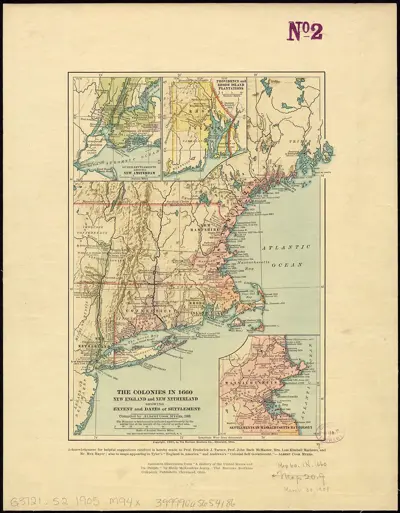
The United Colonies of New England, commonly known as the New England Confederation, was a short-lived military alliance of the New England colonies of Massachusetts Bay, Plymouth, Saybrook (Connecticut), and New Haven formed in May 1643. Its primary purpose was to unite the Puritan colonies in support of the church, and for defense against the American Indians and the Dutch colony of New Netherland. It was the first milestone on the long road to colonial unity and was established as a direct result of a war that started between the Mohegan and Narragansett Indian tribes. Its charter provided for the return of fugitive criminals and indentured servants, and served as a forum for resolving inter-colonial disputes. In practice, none of the goals were accomplished.
