William Wilberforce Quotes
What should we suppose must naturally be the consequence of our carrying on a slave trade with Africa? With a country, vast in its extent, not utterly barbarous, but civilized in a very small degree? Does any one suppose a slave trade would help their civilization?
Wilberforce, William. Speech to the House of Commons. 12 May 1789. The Parliamentary History of England, from the Earliest Period to the Year 1803, vol. 28, T. C. Hansard, 1816, p. 44.


Exploring large parts of Africa


He was also himself a ship owner in the slave trade and he was the brother of the leading Rhode Island abolitionist, Moses Brown. See {585793}. Brown became the first American, prosecuted in federal court for illegal slave trading –-- a prosecution brought, in part, by his own brother. He was, however, acquitted.


Referring to the Arawak natives he found when he landed in the "new world—San Salvador:"

The Ndebele were a warrior caste that had captured the land of the Shona and enslaved them. When the whites came there was antipathy to the Ndebele and great fear that they would have to farm and do manual labor, things which they had always required their slaves to do. At the same time the king was a vicious despot who killed many of his subjects at his whim and who was resented even by the Ndebele. The king took poison rather than be captured by the whites. Ironically, the king anticipated the great dissatisfaction of the Ndebele when they could no longer own slaves and had to do their own manual labor.

Many of the Americans captured by the Islamic Barbary pirates in the years leading up to the Barbary War were sold into slavery. Eaton, who was the American consul at Tunis, couldn’t help but notice the tragic parallel between the suffering of those captured by the pirates and slaves in the American South.
The polygamy referred to the Mormons.

The Republican Party condemned polygamy and slavery in its party platform of 1856
The cotton industry and slavery were a very important part of the economy of Providence, RI. The Rhode Island cotton mills were supplied by Southern cotton produced by slaves and carried from the South on Rhode Island ships. Many of the southern slaves were kidnapped from Africa from Rhode Island slave trading ships. When the slave trade was made illegal, Brown was the first slave trader prosecuted. His brother, Moses Brown, a vehement abolitionist was one of the men who brought the prosecution.

After his Presidency, Adams served in the House of Representatives for many years and was thus active in politics.


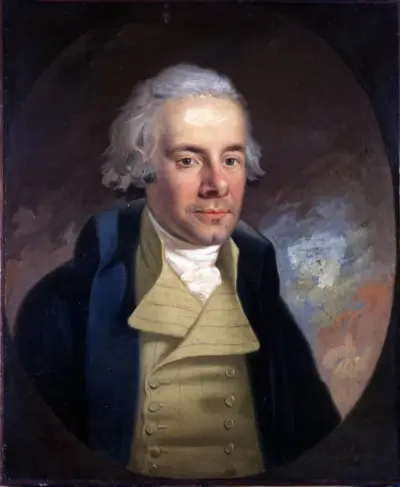
William Wilberforce was a British politician, philanthropist, and a leader of the movement to abolish the slave trade. A native of Kingston upon Hull, Yorkshire, he began his political career in 1780, eventually becoming an independent Member of Parliament (MP) for Yorkshire (1784–1812). In 1785, he became an evangelical Christian, which resulted in major changes to his lifestyle and a lifelong concern for reform.
