Robert Toombs Quotes
Those who tell you that the territorial question is an abstraction, that you can never colonize another territory without the African slavetrade, are both deaf and blind to the history of the last sixty years.
Toombs, Robert. Speech of Hon. Robert Toombs, Delivered in Milledgeville, on Tuesday Evening, November 13, 1860, Before the Legislature of Georgia. Boughton, Nisbet & Barnes, State Printers, 1860.


Referring to the Arawak natives he found when he landed in the "new world—San Salvador:"


He was making a generalization based on his historical study of nations and societies.


Both nations’ colonies were amongst the cruelest in human history with huge numbers of black Africans murdered and mutilated if they would not work in the mines for terrible wages or spoke against the brutal colonial rule.


This was in the first article of their Constitution upon gaining their independence. With a long tradition of Dutch colonialism and a particularly brutal Japanese colonization during WWII, the Indonesians were most preoccupied with this issue.

There is much valuable in old ideas. However every terrible idea in history is today an old idea and we certainly don’t want to respect ideas because they were old and revered or believed by our forefathers.

This quotation distressed many ultra rightists who otherwise were avid followers of Mises. See {632407} for another quotation that distressed many European conservative devotees of Mises.


This quotation was a the description of the nail manufacturing operation using slave labor on Thomas Jefferson’s plantation, Monticello. Note the almost romantic scene that the author paints of slavery and forced child labor. That is why this is a very important quotation. This biography of Jefferson, written for a young audience, was typical of material written about the South and slavery from the late 19th century till the late 20th century. The South was still resentful about losing the war, and there was still, late in the 19th century, negative feelings in the rest of the nation about the South’s lack of patriotism and worse their basic morality of having not only supported but fought to maintain the cruel, evil institution of slavery. Many wanted to get these sectional feelings behind them and move forward. One way was to do much revisionist history about the institution of slavery and the reasons for the Civil war. Books, plays, and later films, and the school curricula, were designed to edit out or minimize the brutality and cruelty of slavery. And the reasons for the Southern rebellion was not any longer only to maintain slavery, but more palatable, almost noble reasons were substituted for the reality that slavery was the only major reason for the Southern rebellion. Maintaining a different culture and way of life, freedom from Federal intrusion in state and local affairs, honor and others were then new given reasons, and the problems of Reconstruction for the South exaggerated to justify the then Jim Crow American era of legal discrimination and lynching. This passage came from a book that was so popular with young people, that it was published again in a new edition as late as 1961. Most white Americans, growing up in the 20th century learned this version of events and many vestiges of it could be seen, even in the 21st century. In the 1970s, with an end to legal segregation, attention turned to the culturally and historically distorted views, and slowly schools began to change curricula. However, in the Southern States, in order to prevent the schools from departing from the false, romantic view of Southern Slavery, local schools where not allowed to select their own textbooks and in many cases even their own library books.


_0_thumbnail_47x47.jpg "A portrait of Richard Allen, a Methodist bishop and founder of the African Methodist Episcopal Church")
Many whites thought that the solution to the problem of free and emancipated Negroes was to send them to Africa. They assumed that the negroes would by desirous of that solution also, but they rarely asked them. When they did, they received answers much like this one from one of the leading Black clergymen in America.


This was the first public outing of Thomas Jefferson’s sexual relationship with his slave Sally Hemmings.

In the first part of the 18th Century, one county in Virginia became a magnet for runaway indentured servants, The more runaways settled there the more empathetic and hospitable they were to new runaway servants. The culture at the time had identified knowing your place in society and accepting it. So a runaway indentured servant had renounced their oath and contrast to serve their masters, and hence were not Christians. These renegades were armed and there was not enough political will or support for forcing the County to comply with the laws and mores of the time.
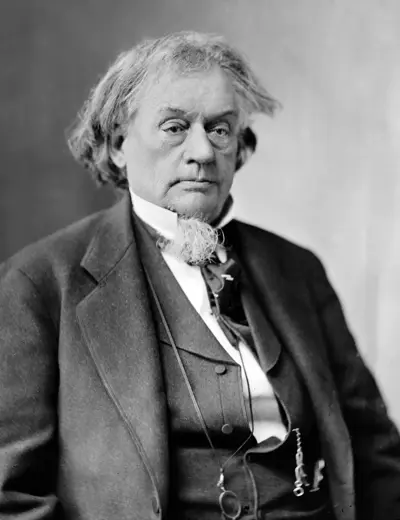
Robert Augustus Toombs was an American lawyer, planter, and national politician from Georgia who became one of the organizers of the Confederacy and served as its first Secretary of State under President Jefferson Davis. He also served in the Confederate States Army, but later became one of Davis' critics. After the Confederate defeat, Toombs fled the United States. He did not return until 1867, after his daughter's death. He regained political power in Georgia as Congressional Reconstruction ended in 1877.
