Shelby Steele Quotes
The evil of slavery and colonialism was that these oppressions kept their victims out of history, disconnected them from the evolutionary struggle.
Steele, Shelby. White Guilt: How Blacks and Whites Together Destroyed the Promise of the Civil Rights Era. HarperCollins, 2006, p. 65.


Referring to the Arawak natives he found when he landed in the "new world—San Salvador:"


This quotation was a the description of the nail manufacturing operation using slave labor on Thomas Jefferson’s plantation, Monticello. Note the almost romantic scene that the author paints of slavery and forced child labor. That is why this is a very important quotation. This biography of Jefferson, written for a young audience, was typical of material written about the South and slavery from the late 19th century till the late 20th century. The South was still resentful about losing the war, and there was still, late in the 19th century, negative feelings in the rest of the nation about the South’s lack of patriotism and worse their basic morality of having not only supported but fought to maintain the cruel, evil institution of slavery. Many wanted to get these sectional feelings behind them and move forward. One way was to do much revisionist history about the institution of slavery and the reasons for the Civil war. Books, plays, and later films, and the school curricula, were designed to edit out or minimize the brutality and cruelty of slavery. And the reasons for the Southern rebellion was not any longer only to maintain slavery, but more palatable, almost noble reasons were substituted for the reality that slavery was the only major reason for the Southern rebellion. Maintaining a different culture and way of life, freedom from Federal intrusion in state and local affairs, honor and others were then new given reasons, and the problems of Reconstruction for the South exaggerated to justify the then Jim Crow American era of legal discrimination and lynching. This passage came from a book that was so popular with young people, that it was published again in a new edition as late as 1961. Most white Americans, growing up in the 20th century learned this version of events and many vestiges of it could be seen, even in the 21st century. In the 1970s, with an end to legal segregation, attention turned to the culturally and historically distorted views, and slowly schools began to change curricula. However, in the Southern States, in order to prevent the schools from departing from the false, romantic view of Southern Slavery, local schools where not allowed to select their own textbooks and in many cases even their own library books.

Alexie, an American Indian, studied wrote about the phenomenon whereby the Indians who were brutalized and attacked by whites with modern weapons and other technological advantages, in the process of defending themselves and their way of life became oppressors to whites in many situations where they could dominate a local scene. Likewise, the Israelis, who were totally oppressed in the Middle East for years and dominated by the more numerous Arabs with over a dozen established national armies attacking the Jewish civilian population when Israel first became a state. However the Jews survived and each time the Arabs attacked and further oppressed the Israelis, the Jews became stronger until at some point the became oppressors of many of the Arabs. The oppressors became the oppressed and vica versa.

This quotation illustrates the level of delusion regarding the importance of slavery that the plantation and slave owners had induced in Southern Society.

Exploring large parts of Africa

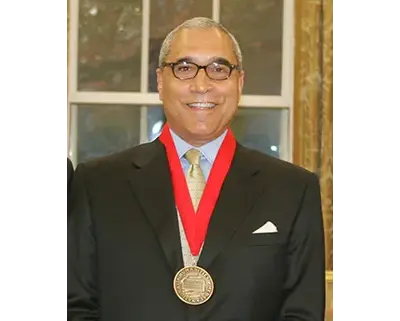
Shelby Steele is a conservative author, columnist, documentary film maker, and a Robert J. and Marion E. Oster Senior Fellow at Stanford University's Hoover Institution. He specializes in the study of race relations, multiculturalism, and affirmative action.
