William H. Seward Quotes
The slave system is one of constant danger, distrust, suspicion, and watchfulness. It debases those whose toil alone can produce wealth and resources for defense, to the lowest degree of which human nature is capable, to guard against mutiny and insurrection, and thus wastes energies which otherwise might be employed in national development and aggrandizement.
William H. Seward, 1801-1872, Governor of New York (Whig), U.S. Senator (Whig & Republican, NY), U. S. Secretary of State, Speech in Corinthian Hall, Rochester, New York, October 25, 1858
Sourced by: Eigen's Political and Historical Quotations


In 1831 a slave preacher, Nat Turner, led a rebellion in North Carolina killing over 50 white men. Even though Turner and the rebels were captured and executed, whites throughout the South, took vengeance on any slaves they could find.


The highway was planned to go through a poor neighborhood which had a high percentage of Black residents—all of whom would have to find other housing and move to make room for the highway. If the government plans a highway through a wealthy area, the cost to condemn and pay for the land will be much greater than if a poor neighborhood is acquired. For urban highways, the poor almost always bear a disproportionate share of the inconvenience while the major benefit inures to the wealthy and middle class. Abbot had been a labor organizer and a professional artist before he entered politics. The graphic is of his famous poster which by itself stopped the plans to build the highway very quickly.

The President often referred to this statement as an example of his wife’s acumen. She had been born to a Southern plantation and inherited the land and the slaves. Her view, and his, were typical of the Southern point of view in early America.

Sexual abuse of female slaves was very common in the American South. See {642027} and {642028}. In the 1930s over 2,300 formerly enslaved African Americans were interviewed by members of the Federal Writers' Project, a New Deal agency in the Works Progress Administration (WPA) during the Great Depression. This particular abuse was one of the most common reported. Ironically, the Southern justification for segregation and prohibition of inter-marriage even through the 1950s, was to prevent the great “crime” of miscegenation which white slave owners and their male friends committed by raping and sexually exploiting the female slaves. Today, as DNA analysis shows, most traditional Southern “white” families have recent Negroes in their ancestry.


He was not only an atheist himself, but he was a major opponent of organized religion which he regarded as one or the major initiators and drivers of slavery, segregation and discrimination. For this reason he was critical of Martin Luther King—{583307}. His irreligiosity had always prevented his gaining much support from his fellow African Americans even though a great writer like H. L. Menken considered Schuyler, "the best writer in America".


In the original Constitution the apportionment of members of the House of Representatives was based on the white population plus After his Presidency, Adams served in the House of Representatives for many years and was thus active in politics.


Miller was the first Black American admitted to a Graduate Program—Johns Hopkins—in Mathematics


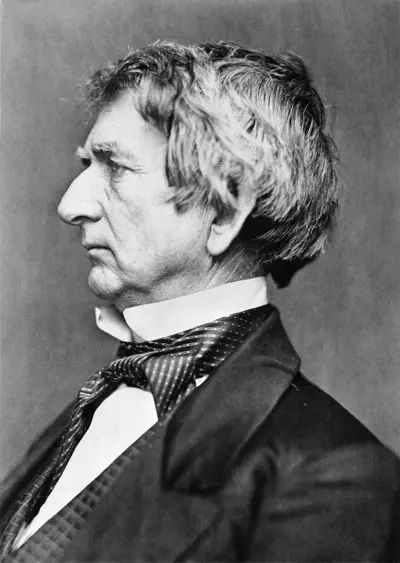
William Henry Seward was United States Secretary of State from 1861 to 1869, and earlier served as governor of New York and as a United States Senator. A determined opponent of the spread of slavery in the years leading up to the American Civil War, he was a prominent figure in the Republican Party in its formative years, and was praised for his work on behalf of the Union as Secretary of State during the Civil War.
