Roger Casement Quotes
Of all the shameful and infamous expedients whereby man has preyed upon man … this vile thing [the rubber trade] dares to call itself commerce.
Roger Casement, 1864-1916, Irish Diplomat and Revolutionary, British Counsel in Africa, Report to the British Foreign Office on the conditions in the Belgian Free State [Belgian Congo], September 1903
Sourced by: Eigen's Political and Historical Quotations

This was written under the name of Ragnar Redbeard. There are a few scholars who believe that it was written by Jack London, but most credit Desmond.

Both nations’ colonies were amongst the cruelest in human history with huge numbers of black Africans murdered and mutilated if they would not work in the mines for terrible wages or spoke against the brutal colonial rule.
John Sutter was an immigrant to California from Switzerland where he became a Mexican citizen. Slavery was outlawed in Mexico and its territories, yet Sutter and others maintained Indians as slaves. The Roman Catholic Missions of California also kept Indian slaves. This quotation is historically important because many people never realized that slavery was prevalent in California.

This is one of the major reasons that Slavery was so hard to end in the South. At the time, the dollar value of the Southern slaves was greater than the value of all the land, factories, inventory, and capital equipment of the South. Slaves were not only capital, they were the largest component of Southern capital and Southern wealth. There were numerous ideas of paying slave owners for the freedom of their slaves, and if this was done, it would have been far less expensive in money alone than the Civil War cost. However, the Southern leadership, like Fitzhugh, were totally intransient with culture and customs—indeed the Southern concept of manhood—was dependent in Slavery. The result was that no compensation was paid to slave owners and the South was impoverished as a result of its capital loss and it would not recover for 150 years.
The human rights abuses in the Belgian Congo were horrible. Natives who refused to work for the low wages were murdered or had their hands chopped off. The indigenous population was markedly reduced. Word of the atrocities started leaking out to Europe. It is not known whether the King really wanted any reform or just sent the instructions to cover himself. The instructions were not followed; the atrocities continued, and Leopold never took any steps to discipline his agents and minions. The Belgian Congo had the worst atrocities in the world until WWII.


He was also himself a ship owner in the slave trade and he was the brother of the leading Rhode Island abolitionist, Moses Brown. See {585793}. Brown became the first American, prosecuted in federal court for illegal slave trading –-- a prosecution brought, in part, by his own brother. He was, however, acquitted.

The “lords of the lash” were the Southern slave owners. The “lords of the loom” were the Northern mill owners. The Southern cotton, grown by cheap slave labor was sold to the Northern mill owners at very low prices. They in turn wove the cotton into cloth and sold it throughout the nation and to foreign countries. So, although there was strong Northern anti-slavery sentiment, the wealthy and politically powerful mill owners had a vested interest in maintaining slavery in the South.
Clark, after becoming one of the richest men in America, wanted to go into National Politics, but most people hated him so he could never win elected office. At the time, Montana selected their Senators by a vote of the State Legislature. So Clark bribed enough members of the legislature to become the Senator. However, the bribery scheme became a public scandal and the Senate refused to seat him. So the legislature had another vote in the next legislative session and Clark won again, and that time no one had the evidence of the bribes. But then, more about Clark became known, and he just served the one term.

None was forthcoming. This letter is of great historical interest in that it shows the corrupting influence of slavery on all facets of society.


In the Jim Crow era and well into the 20th century, many school books and historians, wanting to minimize the enmity between North and South, tended to a historical revisionism where the real brutal and immoral edge of slavery was minimized and slave owners were depicted as being in error by modern standards but well-meaning and paternalistic. Foner, with this famous quotation, put the lie to the false image of paternalistic slavery. By the beginning of the 21st century, there were very few serious historians who still tried to characterize slavery in the South as “paternalistic” otherwise humane. See {584014} for another of Foner’s famous quotes regarding slavery


The cotton industry and slavery were a very important part of the economy of Providence, RI. The Rhode Island cotton mills were supplied by Southern cotton produced by slaves and carried from the South on Rhode Island ships. Many of the southern slaves were kidnapped from Africa from Rhode Island slave trading ships. When the slave trade was made illegal, Brown was the first slave trader prosecuted. His brother, Moses Brown, a vehement abolitionist was one of the men who brought the prosecution.


The sexual exploitation of female slaves by the slave owner and/or his relatives was a phenomenon about which most Southerners were in denial. Light skinned and even white babies, born to Negro slaves was fairly common. The gross immorality was so great that it was too painful for most Southerners – especially white females to even contemplate much less discuss. At the same time, the abolitionists had to be very careful that to raise this problem as delicately as possible lest the lost their audience with such gross and indelicate behavior. This quotation was particularly artfully phrased.
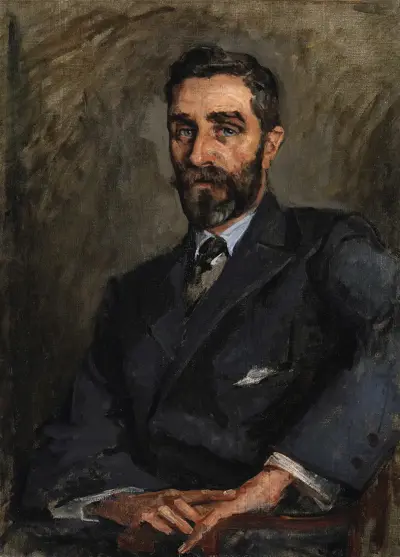
Roger David Casement, known as Sir Roger Casement, CMG, between 1911 and 1916, was a diplomat and Irish nationalist. He worked for the British Foreign Office as a diplomat, becoming known as a humanitarian activist, and later as a poet and Easter Rising leader. Described as the "father of twentieth-century human rights investigations", he was honoured in 1905 for the Casement Report on the Congo and knighted in 1911 for his important investigations of human rights abuses in the rubber industry in Peru.
