Samuel Hopkins Quotes
The inhabitants of Rhode Island, especially those of Newport, have had by far the greatest share of this traffic of all these United States. This trade in the human species has been the first wheel of commerce in Newport, on which every other movement in business has chiefly depended. That town has been built up, and flourished in times past, at the expense of the blood, the liberty, and the happiness of the poor Africans; and the inhabitants have lived on this, and by it have gotten most of their wealth and riches.
Samuel Hopkins, 1721-1803, Clergyman & Early Abolitionist, Accusation of Newport, RI for a major role in Slavery, Providence Gazette, 1787
Sourced by: Eigen's Political and Historical Quotations

He was also himself a ship owner in the slave trade and he was the brother of the leading Rhode Island abolitionist, Moses Brown. See {585793}. Brown became the first American, prosecuted in federal court for illegal slave trading –-- a prosecution brought, in part, by his own brother. He was, however, acquitted.


The cotton industry and slavery were a very important part of the economy of Providence, RI. The Rhode Island cotton mills were supplied by Southern cotton produced by slaves and carried from the South on Rhode Island ships. Many of the southern slaves were kidnapped from Africa from Rhode Island slave trading ships. When the slave trade was made illegal, Brown was the first slave trader prosecuted. His brother, Moses Brown, a vehement abolitionist was one of the men who brought the prosecution.

The “lords of the lash” were the Southern slave owners. The “lords of the loom” were the Northern mill owners. The Southern cotton, grown by cheap slave labor was sold to the Northern mill owners at very low prices. They in turn wove the cotton into cloth and sold it throughout the nation and to foreign countries. So, although there was strong Northern anti-slavery sentiment, the wealthy and politically powerful mill owners had a vested interest in maintaining slavery in the South.

In the Jim Crow era and well into the 20th century, many school books and historians, wanting to minimize the enmity between North and South, tended to a historical revisionism where the real brutal and immoral edge of slavery was minimized and slave owners were depicted as being in error by modern standards but well-meaning and paternalistic. Foner, with this famous quotation, put the lie to the false image of paternalistic slavery. By the beginning of the 21st century, there were very few serious historians who still tried to characterize slavery in the South as “paternalistic” otherwise humane. See {584014} for another of Foner’s famous quotes regarding slavery


Indian and Black slaves were outlawed very early in Connecticut, not on moral grounds of concern for the Indians and Blacks, but because of the negative effects on the white poor. Why would anyone pay the poor any more than the amortization costs of a slave? Therefore there was no way a poor white could make a living wage if slavery were to coexist.
This was written under the name of Ragnar Redbeard. There are a few scholars who believe that it was written by Jack London, but most credit Desmond.


After his Presidency, Adams served in the House of Representatives for many years and was thus active in politics.
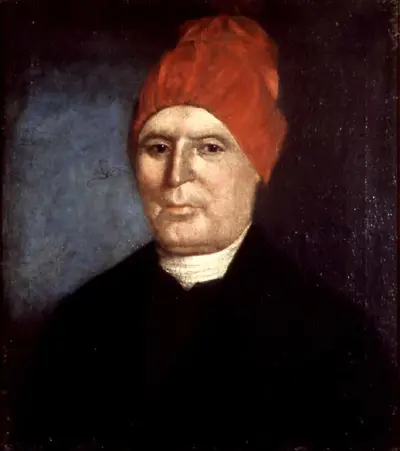
Samuel Hopkins was an American Congregationalist theologian of the late colonial era of the United States. Hopkinsian theology was named for him. Hopkins was an early abolitionist, saying that it was in the interest and duty of the U.S. to set free all of their slaves.
