Cadwallader Colden Quotes
The contraband trade carried on between this place [New York City] and Holland prevails to an enormous degree …. The vessels from Holland … do not come into this port, but anchor at some distance in the numerous bays or creeks that our coast and rivers furnish, from whence the contraband goods are sent up in small boats. Dutch gunpowder has been in use in this colony ever since I came into it.
It was the Dutch that first founded New York and there were many mercantile relationships existing between New Yorkers and Dutch merchants. Initially, the Dutch gunpowder was smuggled into New York because it was less expensive than English gunpowder or gunpowder from Kentucky or other parts of America. (The transportation costs by ship from Holland were much less than the overland cost from Kentucky.) By 1774, there was great friction between American patriots and the British and the smuggling was used to stockpile gunpowder for a possible revolutionary war. See {636944} for insight into the gunpowder shortage.
Cadwallader Colden, 1688–1776, Lieutenant Governor of New York, Letter to Lord Dartmouth, November 1774
Sourced by: Eigen's Political and Historical Quotations


The Revolution was clearly underway although formal hostilities were not to begin until the following year. The Patriots were already trying to stockpile arms and ammunition—especially gunpowder. See {636945}.

We are so used to hearing the freedom seeking reasons for the American Revolution that we overlook the more selfish and venal motives. This quotation shows that the large merchants of the colonies had banded together in an illegal conspiracy trust and monopoly and managed to keep many British competitive products out of the colonies. The British, for equally venal reasons, began to enforce the laws in favor of free trade. Many large American merchants were getting huge profits (and American consumers paying more) from their protectionist illegal monopoly. A Revolution would de facto assure that monopoly for many years to come, so they became supporters—patriots—of the American Revolution. As the Revolution drew closer, the Americans made efforts to protect the protectionism and monopoly of some of the richest Americans. See {636861}.


This agreement was not a law as an English colony like South Carolina could not pass a law that prohibited buying English merchandise. It was unofficial and great pressure was put on any citizen who would not sign it. The merchants that did import goods other than those allowed in the agreement were boycotted by most of the signers. This quotation illustrates what may have been the first organized protectionist actions to assist domestic producers and manufacturers. It is valuable for another reason. The quotation lists goods that are exempted from the boycott. These were goods that were not made in South Carolina or nearby states at the time since if they were, they would have been protected, So we can learn what was manufactured in the colony or nearby at the time—that which is nit on the list but was important to colonial life. The list tells us what was not manufactured locally, and one of the most important were firearms and ammunition. The inability to manufacture armaments plagued the colonies and early America after the revolution. One of the major public expenditures was to create and subsidize domestic arms manufacture.


This was an expression of concern from the merchants of Rhode Island to England regarding curtailing aspects of the slave trade. Ironically, this Remonstrance is one of the first documents objecting to the management of America’s affairs by England when America had no representation. Therefore it played a part in the process which culminated in the American Revolution and freedom from England. And yet the subject was not freedom at all but just the opposite—the prerogative of maintaining the slave trade. Note that the appeal to the Board of Trade was not couched in ethical or political argument but as a mercantile argument—Rhode Islander’s would import less British goods.

There was, well before the American Revolution, a restriction on the importation of British goods into the American colonies. Partially this was to pressure Parliament to stop some of its most repressive lawmaking. But it also supported what had become a very lucrative protectionist monopoly of large American merchants. See {636861}.

This was one of the first and is considered the best of the Colonial arguments against taxation without representation. The argument here about exports also affected other commodities—see {636866}. Despite this, Dulany is not well known in American history because when the Revolution finally came he was a loyalist.
Note that Britain was blockading Boston in the middle of 1775, some time before the outbreak of battles in Concord and Lexington in 1776. What Gates did not tell Lord Dartmouth, and maybe did not know himself, was that the skilled Massachusetts sailors smuggled a great deal through the blockade in small boats at night landing in the many inlets and coves in the Boston area. Also, do not think of Boston in 1775 as today. At that time most people had, in the city, their own farms and gardens and grew much of their own food. The Boston Commons was a common area for grazing sheep. So the British Blockade of Boston was not very effective.

2nd Earl of Guilford. This bill cut off all trade with the American Colonies. It was meant as pressure to cease the rebellion. It did not work.

Cornwallis, who had the misfortune to be the Commanding General of the British forces which were defeated by the brilliant strategy of George Washington and his French Allies, never approved of the British Strategy in America. As a loyal officer, he was a field commander and did not control the overall strategy which most military historians agree was not very sound. While the British controlled New York City, they were surrounded by Washington’s troops and a hostile population. They Armies were separated and while generally too strong to defeat in the field were never strong enough or numerous enough to pacify large areas of the colonies.


See {641497} for a quote from the Grenville speech. Fox, a conservative on most issues was an absolute radical on the issue of America. To aggravate the hawks in parliament, he used to dress in the colors of George Washington’s uniform to show his support once the war broke out.
It was repealed the next year, but much damage had been done to the relationship between the American Colonists and the mother country. It set the tone for American transition to a desire for independence. . Fox, a conservative on most issues was an absolute radical on the issue of America. To aggravate the hawks in parliament, he used to dress in the colors of George Washington’s uniform to show his support once the war broke out.


This quotation shows that the French revolutionaries wished for an invasion of England, even before Napoleon came to power. Part of the reason was the traditional enmity between France and England, even before the French Revolution, and the other part that England was covertly working against the French Revolution and ideologically stood for monarchy and inequality, while the French of the time were Republicans for whom equality was not only an ideal, but part of the law and much of post-revolutionary reality.
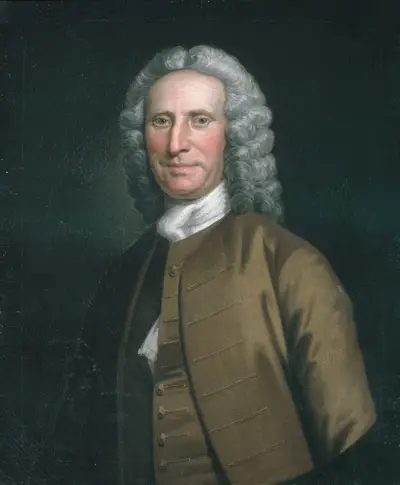
- Born: February 7, 1688
- Died: September 28, 1776
- Nationality:
- Profession:
Cadwallader Colden was a physician, natural scientist, a lieutenant governor and acting Governor for the Province of New York.
