Continental Congress Quotes
No merchant … who violated the Continental Congress’s non-importation directives will be allowed to collect money owed him.
There was, well before the American Revolution, a restriction on the importation of British goods into the American colonies. Partially this was to pressure Parliament to stop some of its most repressive lawmaking. But it also supported what had become a very lucrative protectionist monopoly of large American merchants. See {636861}.
Continental Congress, Law, 1774
Sourced by: Eigen's Political and Historical Quotations

We are so used to hearing the freedom seeking reasons for the American Revolution that we overlook the more selfish and venal motives. This quotation shows that the large merchants of the colonies had banded together in an illegal conspiracy trust and monopoly and managed to keep many British competitive products out of the colonies. The British, for equally venal reasons, began to enforce the laws in favor of free trade. Many large American merchants were getting huge profits (and American consumers paying more) from their protectionist illegal monopoly. A Revolution would de facto assure that monopoly for many years to come, so they became supporters—patriots—of the American Revolution. As the Revolution drew closer, the Americans made efforts to protect the protectionism and monopoly of some of the richest Americans. See {636861}.

The revolutionary acts from some of the more radical colonists but the colonial power structure was trying to negotiate for changes from the taxation and rights-impinging laws that Parliament had passed. Within a year the Continental Congress would take a more revolutionary position when this petition yielded no betterment-- {636864} and {636958}.

This agreement was not a law as an English colony like South Carolina could not pass a law that prohibited buying English merchandise. It was unofficial and great pressure was put on any citizen who would not sign it. The merchants that did import goods other than those allowed in the agreement were boycotted by most of the signers. This quotation illustrates what may have been the first organized protectionist actions to assist domestic producers and manufacturers. It is valuable for another reason. The quotation lists goods that are exempted from the boycott. These were goods that were not made in South Carolina or nearby states at the time since if they were, they would have been protected, So we can learn what was manufactured in the colony or nearby at the time—that which is nit on the list but was important to colonial life. The list tells us what was not manufactured locally, and one of the most important were firearms and ammunition. The inability to manufacture armaments plagued the colonies and early America after the revolution. One of the major public expenditures was to create and subsidize domestic arms manufacture.

2nd Earl of Guilford. This bill cut off all trade with the American Colonies. It was meant as pressure to cease the rebellion. It did not work.


There was much New England dissatisfaction with the disproportionate power held by the Southern states as a result of counting three-fifths of the slave population for apportioning Congressional seats. In addition they were disproportionately hurt by the War of 1812 and the Embargo on trade with England. Secession was proposed but failed to get a majority. A number of proposed Constitutional amendments were voted upon. The super-majority herein required would have diminished their vulnerability to Southern power.

The French had a much different agenda in the new world than the British who wanted to create residential colonies. The French were more interested in trade—not in establishing permanent colonies. The result was that the French were in many ways better trading partners for the Indians than the English. They came without women, intermarried among the Indians and learned the languages; they did not contest for land, and they paid the Indians more for pelts and furs than the English were willing to. At the same time they exacerbated conflicts with the colonists, and encouraged Indian attacks on settlers as that kept competition out. They were not above giving Indians alcohol and encouraging them to rob the furs and/or kill their English competitors. So on two levels, they had to be removed. See the military view of Robert Rogers: {614122}.

Surprising to us today is the reality that before this law, it was perfectly legal for American Citizens to sell transport all kinds of goods and materials to enemies of the country—even in the midst of a war. At the beginning of the War of 1812, New England merchants were selling, shipping, and delivering meat and other critical provisions to the English Armies in Canada. There is an unfortunate long history of this. IBM sold punch card equipment and technology to the Nazis through European subsidiaries prior to and during WWII. American oil companies were helping the Arab countries enforce their embargo against is in the 1970s. American firms shipped weapons technology to Iraq when they threatened to create weapons of mass destruction. It has often been difficult to get American companies to pass up profits for patriotic reasons unless there were strong laws and enforcement.


Today, most Americans know little of Samuel Adams but see John Adams as a much larger and more important figure. But for the American Patriots fighting the Revolution, it was Sam Adams who made the most outstanding contributions to the political strategy and leadership.

In this case the tariffs were imposed not to protect national industries but to simply raise revenue. In the early years of the United States, almost all of the Federal Revenue was raised this way.

This is a very interesting quotation. A contemporary historian tells us how rapidly the American colonists organized when Parliament passed the Tea Tax. Even with the Internet and social media it would be hard to organize representation from 13 states that fast today. The word of mouth and mail of the day was surprising to most of us. The passion on the issue and the public interest must have been extraordinary. Ramsay was the first major historian of the American Revolution.

During the American Revolution, conditions were very difficult for Washington’s soldiers who were ill armed, ill clothed, and ill fed while they were paid irregularly. At one point morale was so low that some of the soldiers revolted. Smyth observes that Washington and Congress disciplined the mutineers very mildly, especially when compared with the way the British would deal with such things. The British Governor Clinton tried to take advantage of the mutiny and the poor morale by announcing that all of Washington’s troops who wished could obtain amnesty and join the British forces where the pay and conditions were much better. Professor Smyth found it fascinating that none of the Americans would join the British and he credits it to the wise and mild discipline policies of Washington and Congress as well as the general perception of the justice of the American cause among the American troops.

At the beginning of the dispute between America and England, the issue was the raising of internal American taxes by Parliament without any American representation in Parliament. The issue escalated and when the British began using force, independence then became the American objective.


The crackdown on Boston which was intended to set an example and intimidate all of the other colonies backfired, and the British were told about it by their own officials in America. But they were so rigid and ideological about monarchy, that the stimulated rebellion rather than suppress them.
Mechanics was a general term for people who made things, or fixed things. Ramsay was the first major historian of the American Revolution.

It was repealed the next year, but much damage had been done to the relationship between the American Colonists and the mother country. It set the tone for American transition to a desire for independence. . Fox, a conservative on most issues was an absolute radical on the issue of America. To aggravate the hawks in parliament, he used to dress in the colors of George Washington’s uniform to show his support once the war broke out.
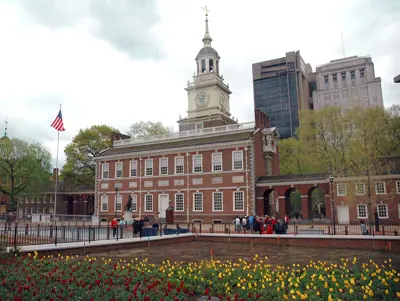
The Continental Congress was a series of legislative bodies which met in the British American colonies and the newly declared United States just before, during, and after the American Revolution. The term "Continental Congress" most specifically refers to the First and Second Congresses of 1774–1781 and may also refer to the Congress of the Confederation of 1781–1789, which operated as the first national government of the United States until being replaced by the current congress. Thus, the term covers the three congressional bodies of the Thirteen Colonies and the new United States that met between 1774 and 1789.
