Benjamin Franklin Quotes
Convert the brave, honest officers of your navy into pimping tide-waiters and colony officers of the customs. Let those, who in time of war fought bravely in defense of the commerce of their countrymen, in peace be taught to prey upon it, Let them learn to be corrupted by great and real smugglers; but (to show their diligence) scour with … boats every bay, harbor, river, creek, cove or nook throughout the coast of your colonies, stop and detain every coaster, every wood boat, every fisherman …. O! This will work admirably!
Benjamin Franklin, 1706-1790, Member of the Continental Congress & the Constitutional Convention, Governor of Pennsylvania, President of the Pennsylvania Assembly, U.S. Minister to France, Postmaster General of the American Colonies, Wickedly sarcastic entreaty to his many friends in England to stop their current policy, 1773
Sourced by: Eigen's Political and Historical Quotations


There was, well before the American Revolution, a restriction on the importation of British goods into the American colonies. Partially this was to pressure Parliament to stop some of its most repressive lawmaking. But it also supported what had become a very lucrative protectionist monopoly of large American merchants. See {636861}.


This was the major source of revenue for the early United States Federal Government. The duty had to be paid each time the ship came into a U. S. port except for fishing vessels which paid only once a year. Note that favorable rates were charged for ships owned by U. S. Citizens or built within the United States.

This was an expression of concern from the merchants of Rhode Island to England regarding curtailing aspects of the slave trade. Ironically, this Remonstrance is one of the first documents objecting to the management of America’s affairs by England when America had no representation. Therefore it played a part in the process which culminated in the American Revolution and freedom from England. And yet the subject was not freedom at all but just the opposite—the prerogative of maintaining the slave trade. Note that the appeal to the Board of Trade was not couched in ethical or political argument but as a mercantile argument—Rhode Islander’s would import less British goods.


There has always been pressure from different interests to exempt certain products from duty and place higher duties on others. Calhoun urged a policy that would be based on general economic prinicples and conditions and not on pressure from special vested interests. He was a senator at the time.

FDR, Eleanor and lost liberals of the time were advocates of a strong military, and unlike after the 2nd Word War, most of the Republicans were conservative isolationists who were opposed to spending much public money for the armed services or weapons.

We are so used to hearing the freedom seeking reasons for the American Revolution that we overlook the more selfish and venal motives. This quotation shows that the large merchants of the colonies had banded together in an illegal conspiracy trust and monopoly and managed to keep many British competitive products out of the colonies. The British, for equally venal reasons, began to enforce the laws in favor of free trade. Many large American merchants were getting huge profits (and American consumers paying more) from their protectionist illegal monopoly. A Revolution would de facto assure that monopoly for many years to come, so they became supporters—patriots—of the American Revolution. As the Revolution drew closer, the Americans made efforts to protect the protectionism and monopoly of some of the richest Americans. See {636861}.


By the 21st century, there were few who would agree with Roosevelt on this point. The contributions of inventors and scientists and then business men and financiers.
Note that Britain was blockading Boston in the middle of 1775, some time before the outbreak of battles in Concord and Lexington in 1776. What Gates did not tell Lord Dartmouth, and maybe did not know himself, was that the skilled Massachusetts sailors smuggled a great deal through the blockade in small boats at night landing in the many inlets and coves in the Boston area. Also, do not think of Boston in 1775 as today. At that time most people had, in the city, their own farms and gardens and grew much of their own food. The Boston Commons was a common area for grazing sheep. So the British Blockade of Boston was not very effective.

The Revolution was clearly underway although formal hostilities were not to begin until the following year. The Patriots were already trying to stockpile arms and ammunition—especially gunpowder. See {636945}.

It was the Dutch that first founded New York and there were many mercantile relationships existing between New Yorkers and Dutch merchants. Initially, the Dutch gunpowder was smuggled into New York because it was less expensive than English gunpowder or gunpowder from Kentucky or other parts of America. (The transportation costs by ship from Holland were much less than the overland cost from Kentucky.) By 1774, there was great friction between American patriots and the British and the smuggling was used to stockpile gunpowder for a possible revolutionary war. See {636944} for insight into the gunpowder shortage.


This agreement was not a law as an English colony like South Carolina could not pass a law that prohibited buying English merchandise. It was unofficial and great pressure was put on any citizen who would not sign it. The merchants that did import goods other than those allowed in the agreement were boycotted by most of the signers. This quotation illustrates what may have been the first organized protectionist actions to assist domestic producers and manufacturers. It is valuable for another reason. The quotation lists goods that are exempted from the boycott. These were goods that were not made in South Carolina or nearby states at the time since if they were, they would have been protected, So we can learn what was manufactured in the colony or nearby at the time—that which is nit on the list but was important to colonial life. The list tells us what was not manufactured locally, and one of the most important were firearms and ammunition. The inability to manufacture armaments plagued the colonies and early America after the revolution. One of the major public expenditures was to create and subsidize domestic arms manufacture.
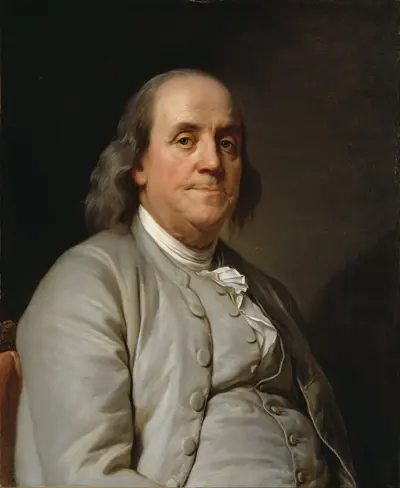
Benjamin Franklin FRS FRSA FRSE was one of the Founding Fathers of the United States. A polymath, he was a leading writer, printer, political philosopher, politician, Freemason, postmaster, scientist, inventor, humorist, civic activist, statesman, and diplomat. As a scientist, he was a major figure in the American Enlightenment and the history of physics for his discoveries and theories regarding electricity. As an inventor, he is known for the lightning rod, bifocals, and the Franklin stove, among other inventions. He founded many civic organizations, including the Library Company, Philadelphia's first fire department, and the University of Pennsylvania.
