Jean-Lambert Tallien Quotes
Spanish and Dutch ships with whose help we would hasten to the banks of the Thames and destroy the new Carthage [London]
This quotation shows that the French revolutionaries wished for an invasion of England, even before Napoleon came to power. Part of the reason was the traditional enmity between France and England, even before the French Revolution, and the other part that England was covertly working against the French Revolution and ideologically stood for monarchy and inequality, while the French of the time were Republicans for whom equality was not only an ideal, but part of the law and much of post-revolutionary reality.
Jean-Lambert Tallien, 1767–1820, French Revolutionary Politician & Diplomat, ~1795, Quoted in Simon Schama, Patriots & Liberators: Revolution in the Netherlands 1780-1813
Sourced by: Eigen's Political and Historical Quotations


Ironically, when he attacked Athens in 480 BC, the Athenians under Themistocles, abandoned the city—see {612656}—and lured the overly-confident Xerxes into a sea battle at Salamis where the Persians were totally destroyed. A few public buildings of Athens were burned, but before Xerxes could fulfill his vow, he was defeated and had to retreat to Persia.
He arrived in 1527, 7 years before De Soto and in a 6,000 mile ordeal, was the first white to cross the explore the interior of the continent. He was describing the Spanish slavers behavior with respect to the Indians of the New World.

In 1832 the President sent Edmund Roberts, a New Hampshire sea captain, to arrange commercial treaties with Asian countries such as Burma, Indo-China, Siam and Japan:

Paine was describing the conquest of England in 1066 by William the Conqueror.


He conquered Korea in an act of blatant aggression, but got bogged down in a complicated occupation. He died before the Chinese part of the plan could be carried out. However, ever since China, Korea and other Asian countries have distrusted Japan and her aggressive intentions and history. The horrible Japanese record of aggression and atrocities of WWII solidified that anti-Japanese sentiment which still exists to some extent.


Koxinga had an overwhelmingly superior force, and wanted the Dutch to surrender and avoid bloodshed. The Dutch with their typical European colonial attitude, had great difficulty surrendering to “natives” even if outnumbered. Finally, the Dutch Commander agreed to surrender. Koxinga then established a Chinese Government on the Island and became a great hero of the Ming Dynasty. Note the graphic of the statue to him which is one of the very few Chinese memorial statues to a military hero showing him in action—very similar to European statues. Already Koxinga’s massed wooden junks with small cannon and fire torches had sunk one of the Dutch warships (they were not iron but had some iron plates on the deck to protect the gunners) and there were so many junks that the other Dutch ships sailed out to sea to avoid the Chinese huge number of junks.
The phrase “put them under contribution” was a practice of making a town pay for the costs of the British military effort in the area. To some, this was blackmail and extortion, pay cash or get destroyed. The Prime Minister thought that the American public sentiment at the time would not be intimidated to pay in a significant number of towns or cities.

Nantucket was the center of the New England whaling fleet which at the time plied the Earth’s oceans and influenced non Western People the world over. It was a type of cultural imperialism although the whalers sized or claimed anyone’s land or controlled any nation’s trade.

This is a fascinating historical quotation. The English Foreign Minister and sent a draft of his proposed policy of English involvement to make Spain more democratic to counteract the influence of France which was then England’s arch enemy. The French had a military-oriented right wing government. The Queen, although only 27 years old at the time, had a brilliant grasp of foreign policy and the sagacity of an elder statesman. (And women in the United Kingdom could not even vote.) She realized that once England was involved in nation building and backing one party in Spain, England would be responsible for whatever that party ended up doing, and yet England really could not control the situation. Corruption, violations of civil rights, impoverishment all might occur, and England would have to defend those things lest the French who would then support the opposition would gain an upper hand in a proxy war. The situation was very similar to the United States getting involved in Vietnam and supporting the South Vietnam government which, despite U. S. efforts to the contrary, was totally corrupt, inept, religiously discriminatory, and totally inept in providing good government to the people. A similar situation occurred with the American intervention in Afghanistan where the President operated a totally corrupt and inept government and we were forced to support him. On other occasions she goes even further and actually writes new copy of policies personally. Note that the formality of the time required that the Queen refer to herself in the third person and not the first.


While he fairly described the Spanish intentions, the reality which was not known at the time, was that most of the deaths in South America were caused by disease brought by the Spanish for which Europeans had some immunities and the natives of the New Word, none.

See {636935}for the policy decision that triggered this order.

This quotation illustrates that the Muslim conquest and attempt to destroy and desecrate the symbols of other religions was not limited to Christianity—it was ALL other religions. In that sense, Christianity and Islam of the period were very similar at the time—intolerance to the point of murder and destruction of any “heathen” religion.


The American plan was to capture Quebec and add that province to the 13 colonies. See {636940} . However, the American officers botched the invasion and did not attack as soon as they arrived when the British had almost no troops to defend Quebec.

David Bushnell, 1740–1824, was a student at Yale University where he developed the first submarine used in warfare. While at Yale, Bushnell proved that gunpowder could be exploded under water. He also made the first time bomb. He combined these ideas by building the Turtle which was designed to attack ships by attaching a time bomb to their hulls, while using a hand powered drill and ship auger bit to penetrate the hulls. He used the Turtle in attempts to attack British ships which were blockading New York Harbor in the summer of 1776. His efforts failed every time because the Turtle's boring device was unable to penetrate the copper sheeting lining in the ships' hulls which was designed to protect against parasites in their previous station, the Caribbean. (From Wikipedia)

Frederick the Great. He and many other Europeans thought that England had been so preoccupied with the American rebellion that she was ignoring Europe and other traditional foreign policy interests of theirs.

Shlomo ben Yitzchak

The French had agreed that once the Dutch started the uprising, they would send French troops to support the revolution. The French Revolutionary government was ideologically opposed to the Dutch Monarchy of the House of Orange on their border nor did they want the British influence which existed by virtue of the support England gave to William V and the Orangists. When the uprising started, the French kept their word and sent in an army of invasion to support the revolutionary government. See {639776}.
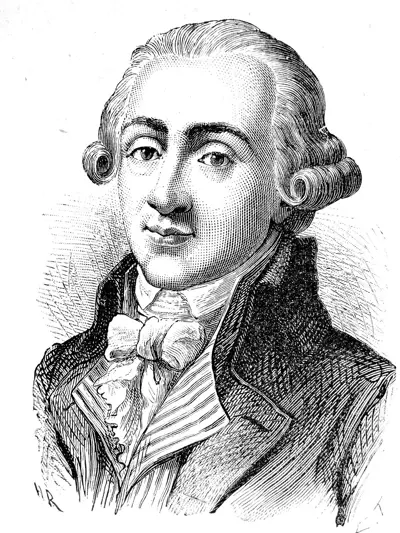
Jean-Lambert Tallien was a French political figure of the revolutionary period.
