Kenneth E. Boulding Quotes
The greater the penalties laid on sellers in the black market... the higher the black market price.
Kenneth Ewart Boulding, 1910-1993, Economist & Philosopher, "A Note on the Theory of the Underground economy", The Canadian Journal of Economics and Political Science. Vol. 13 no.1, 1947
Sourced by: Eigen's Political and Historical Quotations


She was talking about the Soviet Union


Whenever price controls have been tried, there always seems to develop a black market. However, some argue that price controls can work very well for a modest period of time in a national emergency and give WWII as an example. Although there was a black market, very few Americans participated in it, and the effect was positive as a result of the patriotism that was so keenly felt by most Americans at that time. Further, capital punishment has rarely worked to prevent any illegal activity. In London, pickpockets were publicly hung while other pickpockets fleeced the crowd watching the hanging ostensibly to dissuade people from pickpocketing.

These appear to be the first economic regulations of New England. Note that although there was a Governor of the Colony, such economic issues were considered to be fundamentally religious in nature. Therefore Cotton—the leading cleric of the colony—was called upon to in effect legislate on the subject. Ironically, this is not terribly different from the theocracy in Iran or some other Muslim countries of today where like some of the early American Colonies, there was no separation of church and state.


With Prohibition, the demand for alcohol was the same as ever, but the supply was restricted. Since much of the alcohol in the south was produced in illegal stills, Prohibition, did not affect the supply from those sources. As a matter of fact history shows that they ramped up production to fill the supply gap that was created by Prohibition. The North had very few illegal stills before Prohibition and there was very little capability to replace the legal sources that Prohibition had curtailed.


That is exactly what the IRS did, and in 1931, Capone was imprisoned for tax evasion.

There were not many large companies in the agribusiness selling chemicals, fertilizers, pesticides and seeds to the farmers of America. When there was an attempted merger, the regulators were supposed to make sure that the merger press would not be responsible for higher prices as with the merger, there would be less competition. As Holcomb said in this quotation, the companies would typically tell the regulators how they merger would produce synergistic cost savings for the farm products. And in theory that wold be true in most cases. However once the company receives approval, the tend to claim the products are losing money and they must raise prices. And often that is true but the main reason for the loss is the cost of the money that they usually borrowed to pay for the acquisition.


The Revolution was clearly underway although formal hostilities were not to begin until the following year. The Patriots were already trying to stockpile arms and ammunition—especially gunpowder. See {636945}.
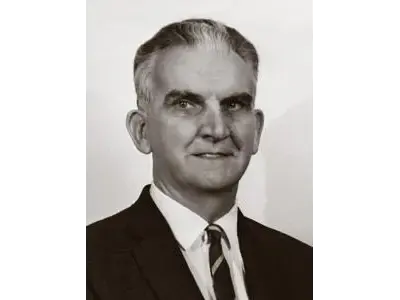
Kenneth Ewart Boulding was an English-born American economist, educator, peace activist, and interdisciplinary philosopher. Boulding was the author of two citation classics: The Image: Knowledge in Life and Society (1956) and Conflict and Defense: A General Theory (1962). He was co-founder of general systems theory and founder of numerous ongoing intellectual projects in economics and social science. He was married to sociologist Elise M. Boulding.
