Hassan al-Banna Quotes
My brothers, you are a new soul in the heart of this nation to give it life by means of the Koran.
Hassan al Banna, 1906-1949, Egyptian Founder of the Muslim Brotherhood, Stated in 1943, Quoted in Robin Wright, Sacred Rage, 1985
Sourced by: Eigen's Political and Historical Quotations

The irony of his lecturing the Russians was that the revolutionary regime he founded in Iran, which had faith in God, was terribly unpopular with the Iranian people precisely because of the lack of private ownership and freedom and a moribund economy. The ruling religious elite in the Iranian theocracy had to ban popular leaders from standing for election in order to maintain control of a country where most people preferred the very things that Khomeini and the other Ayatollahs advised were unimportant.


“Qur’an” is another way of spelling “Koran”. The belief in the perfection of the Koran is fairly common in Islamic nations. If Sharia is the civil law, as many Muslims insist that it is or should be, then there is no system of amendment and nothing that has occurred or has been learned since 800 AD that is any reason to improve or modify the law. Modern Islamic nations cope with this problem in one of three ways. The Fundamentalists take the Koran literally in all things and nothing is ever amended or modernized. Modernists will treat the Koran and Sharia as metaphorical and interpret it in the light of the modern world. More secular nations (like Turkey and Indonesia) reject Sharia as a civil legal system or as a source of inspiration of civil law.


This verse has been one of the bases of Muslim theocratic states like Iran’s claim to legitimacy. The word “govern” is sometimes translated as “judge.” In the context of the 6th century, there were no separation of powers as we know them and judging, governing and legislating were melded.


Al-Omar is one of Saudi’s leading clerics and the Saudi Arabian government—supposedly is a major ally of the United States—not only tolerates this type of inflammatory rhetoric but it makes no effort to repudiate this and other radical Islamic statements. There is no freedom of Speech in Saudi Arabia, and people are arrested all the time for saying things that are displeasing to the Royal Family. But no attempt to suppress this kind of virulent anti-American attack.


This verse has been one of the bases of Muslim theocratic states like Iran’s claim to legitimacy.

The communal support of scholarship was common in the Middle East in both Muslim and Jewish communities.

The Ethical Culture Society was founded as what many people call a secular religion. See {619942}.
Al-Maarri’s quotations are not only meaningful in their own right, but they illustrate the openness and free thinking that was allowed in the early days of Islam before about 1100. If anyone wrote such things today in most Islamic countries he would at least be jailed if not executed for blasphemy. And if any Christian in Europe made the same statement, he would have been excommunicated at least if not tortured and murdered.

He was one of the world’s greatest polymaths who among his other accomplishments was the “Father of Sociology” and was the leading Islamic intellectual of his era.

This is another of De Tocqueville’s prescient statements that in retrospect seem so amazing given the time. This quotation could serve as an op ed in a newspaper of any of the industrial democracies of the early 21st century. However, he did not have the information of the details we have today that showed Islam as the pinnacle of scientific, philosophical, literary and medical achievement at the beginning of the second millennium, while the Christian nations of Europe were mired in the Dark Ages. It was the same Koran but a very different interpretation and framework that led to the decadence while it was the Protestant Reformation that triggered a Christianity that was hospitable to modernity and enlightenment.

It is amazing what explanations religious and biased fanatics can come up with to explain history.


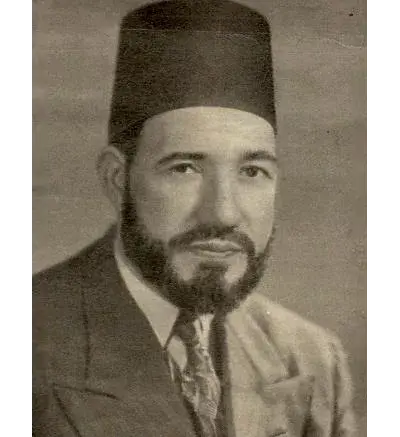
Sheikh Hassan Ahmed Abdel Rahman Muhammed al-Banna, known as Hassan al-Banna (Arabic: حسن البنا), was an Egyptian schoolteacher and imam, best known for founding the Muslim Brotherhood, one of the largest and most influential Islamic revivalist organizations.
