ABU ABDULLAH MUHAMMAD IBN BATTUTA
(Ibn Battuta)
Although Mogadishu was Muslim, Blacks were in total control and not Arabs.
Nowhere else in the world was there this large a number and density of sophisticated learning institutions. These colleges were midway between a college and a high school in the learning level and student ages of modern times.
The large communal worship of Muslim men is dramatic throughout the Islamic world for the non-participation of women. However, as this quotation demonstrates, it was not always thus. There is precedent for large communal Islamic worship of women.
The level of religious charity would be impressive for modern times. It is a marvelous insight into 14th Century Damascus.
The communal support of scholarship was common in the Middle East in both Muslim and Jewish communities.
villages in the African interior Slave raiding of Black African villages was well entrenched long before Europeans and Americans discovered the profits of the slave trade. Even at the height of the African slave trade, most European slavers purchased their slaves from Muslim slave traders who did the initial capturing and sold them to the Europeans and Americans for transport. Note the description of the excellent character of the Sultan who was generous and egalitarian with fellow Muslims but viciously captured non-Muslims and used and sold them as slaves. Ibn Battuta saw nothing inconsistent in that as the Koran only prohibited keeping Muslims in slavery
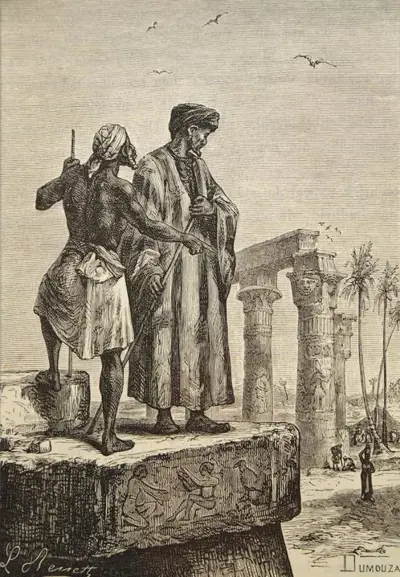
Ibn Battuta was a Muslim Berber-Moroccan scholar, jurist and explorer who widely travelled the Old World, largely in the lands of Dar al-Islam, travelling more than any other explorer in pre-modern history, totalling around 117,000 km (72,000 miles), surpassing Zheng He with about 50,000 km (30,000 miles) and Marco Polo with 24,000 km (15,000 miles). Over a period of thirty years, Ibn Battuta visited most of the Old World, including Central Asia, Southeast Asia, South Asia, China and the Iberian Peninsula. Near the end of his life, he dictated an account of his journeys, titled A Gift to Those Who Contemplate the Wonders of Cities and the Marvels of Travelling, but commonly known as The Rihla.
