Abu Abdullah Muhammad Ibn Battuta Quotes
In this mosque also there are a great many students who never leave it, occupying themselves unremittingly in prayer and recitation of the Koran ... The townsfolk supply their needs of food and clothing, although students never beg for anything of the kind from them
The communal support of scholarship was common in the Middle East in both Muslim and Jewish communities.
Abu Abdullah Muhammad Ibn Battuta, 1304-1377), Moroccan Berber Traveler & Explorer, Description of the Umayyad Mosque (or "Great Mosque") of Damascus, built in the 8th century, 1326, Rihla [Travels]
Sourced by: Eigen's Political and Historical Quotations

The level of religious charity would be impressive for modern times. It is a marvelous insight into 14th Century Damascus.

The Prince had given $20 million to American Universities to establish Islamic Studies programs however. The Muslim religion requires believers to proselytize and spread the faith, while Saudi and Islamic law prohibits any other faith from being public or promoted. It is illegal, for example, to even bring a Christian Bible into the Kingdom. During the Gulf War, American soldiers defending Saudi Arabia were not allowed to bring in their religious texts unless they were Muslims.
Turkey under its great leader, Ataturk, underwent a major cultural revolution. Although Turkey is overwhelmingly Muslim, its constitution provides that it be a secular state with compulsory public non-sectarian education. They adopted a European style law and prohibited Sharia (Islamic law). The nation thrived as no other Muslim country has. Muslims, the world over, are divided on Turkey. For this Sheikh its secular government is an insult to Islam because there is complete separation of mosque and state. For others it is the model which all Muslim countries should emulate.
The large communal worship of Muslim men is dramatic throughout the Islamic world for the non-participation of women. However, as this quotation demonstrates, it was not always thus. There is precedent for large communal Islamic worship of women.


Rio Tinto wanted to reopen a copper mine in Arizona. This would create many jobs for Apache Indians on the San Carlos Reservation. However, the proposal involved a complicated land swap whereby the Federal Government would cede some land to Rio Tinto. The land to be transferred was considered sacred ground by many Apaches who did not want it turned over to Rio Tinto or any company. The swap would offend their religion according to some. The Congresswoman tried to mediate.

These suras are ones that for some fundamentalist extremists justified the killing of Iraqis Muslims who worked with the British, Americans or other Coalition forces in the Iraq war or even politicians who cooperated with the coalition.

Public money had traditionally been spent to support shrines of Muslim saints. Ataturk ended such subsidies.

This quotation illustrates that a narrow orthodox view of Islam is not the only one in Arab nations. Khaled is not an obscure cleric, but a popular television personality. While his views are considered heresy by many orthodox Muslims, the narrow view is by no means universal. Orthodox Islamists believe that God has commanded that all mankind be Muslims and the ones who are not are either ignorant so need to be “educated”, or evil and therefore should be killed. However, Muhammad ordained that an exception should be made for “Children of the Book”—Jews and Christians who revere the Old Testament. This was at a time when Christians would not allow any other form of worship but Christianity. Christianity, Judaism and most other religions have become tolerant of other religions and allow open alternative worship. Islam which early on led the way to tolerance, has in many countries gone back to the intolerance that existed amongst many Christians at the time of Muhammad.


She was born a Muslim herself and her life has been threatened by other, Muslims who are fundamentalists who are living proof or her point.
Al-Omar is one of Saudi’s leading clerics and the Saudi Arabian government—supposedly is a major ally of the United States—not only tolerates this type of inflammatory rhetoric but it makes no effort to repudiate this and other radical Islamic statements. There is no freedom of Speech in Saudi Arabia, and people are arrested all the time for saying things that are displeasing to the Royal Family. But no attempt to suppress this kind of virulent anti-American attack.
What makes this quotation very notable is the fact that Dr. El-Naggar is not even a cleric but a scientist. and yet in spite of his education, much broader than most Muslim men, he still thinks of the Koran as the only source of truth available to man. Observation, deduction, induction, experimentation all have no weight. Herein lies one basic difference between Islamic Fundamentalists on the one hand and Christian, Jewish, Hindu & Buddhist and other religion’s fundamentalists. All may accept their holy book as the revealed truth, but it is only the fundamentalist Muslim who believes that it is the ONLY source of truth and wisdom. A classic difference between the radical fundamentalist and the moderates is that moderates, like almost all religious people on earth, believe that there are other sources of knowledge, truth and wisdom besides their holy book.


She is a leading American Arab who is a Syrian expatriate.
This is a particularly interesting passage of the Koran. On the one hand it provides the religious justification for the sexist dominance of the male in a marriage. However, at the same time, it gave wives rights at a time when few cultures and religions did--such as the right to own and inherit property. Women in the Western world did not obtain some of these rights until the last hundred years. So historically, Islam was somewhat ahead of Christianity when Muhammed lived, but while most Western interpretations of gender role and rights have changed and advanced, a small minority of Islam has been reformist and modern so Islam has gone from a leader in modern gender relations to an obstacle to equality and fairness by not changing and reforming.
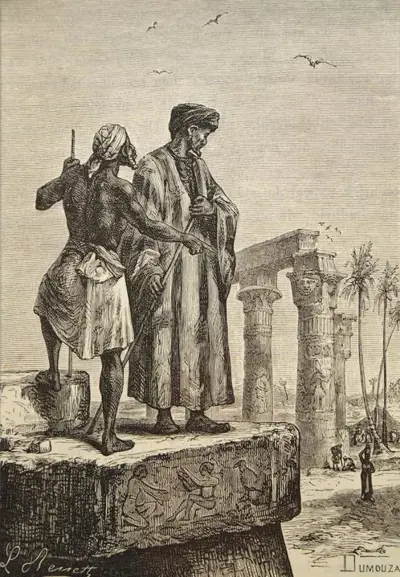
Ibn Battuta was a Muslim Berber-Moroccan scholar, jurist and explorer who widely travelled the Old World, largely in the lands of Dar al-Islam, travelling more than any other explorer in pre-modern history, totalling around 117,000 km (72,000 miles), surpassing Zheng He with about 50,000 km (30,000 miles) and Marco Polo with 24,000 km (15,000 miles). Over a period of thirty years, Ibn Battuta visited most of the Old World, including Central Asia, Southeast Asia, South Asia, China and the Iberian Peninsula. Near the end of his life, he dictated an account of his journeys, titled A Gift to Those Who Contemplate the Wonders of Cities and the Marvels of Travelling, but commonly known as The Rihla.
