Abu Abdullah Muhammad Ibn Battuta Quotes
The madrasas colleges of Cairo cannot be counted for multitude.
Nowhere else in the world was there this large a number and density of sophisticated learning institutions. These colleges were midway between a college and a high school in the learning level and student ages of modern times.
Battuta, Abu Abdullah Muhammad Ibn, 1304- ~1368, Moroccan Berber Scholar and Islamic Law Judge, Traveler & Explorer, Description of the numbers of college level madrassas (schools) in Cairo
Sourced by: Eigen's Political and Historical Quotations

Many of the difficulties been Islam and the West can be traced to a huge gulf in what constitutes a proper education. In this case, the Indian Governor General was explaining to Queen Victoria that while the Hindus in India were getting very well educated and were qualified for many government administrative positions, the Muslims were not. See {630719}. Even in modern times most colleges and universities in Islamic nations are highly focused on religion to the expense of mathematics, the sciences, and non Islamic literature.

In early Islam, scholarship and science was encouraged in all fields and in most areas the Muslims state of knowledge was greater than that of Christian Europe. However, over time the fundamentalists restricted the concept of knowledge to the Koran under the theory that anything worth knowing was in the Koran and that which was not should not be studied. In modern times Islamic nations, holding this very narrow view of education and learning, have intellectually stagnated—especially in modern science, technology, politics and philosophy. Most Islamic universities and madrasses teach only theological subjects and Koranic prescriptions of life and law and the few exceptions tend to be in strongly secular countries like Turkey.

This quotation is fascinating but sad. In 1902, Aga Kahn III and other Muslim reformers gathered to improve the terrible state of Muslim education. Muslims could attend the English operated public schools which were excellent, but the Imams fought these schools as they were purely secular and not under their control. Yet the Madrassas religious schools that then existed taught by rote and only Islamic religious content—no mathematics, science, other literature, art or anything else. Much of the teaching was religiously extreme with not even modern religious content. Over a century later the Schools of Pakistan—the Islamic nation carved out of India and those of most of the Arab nations are little better and despite a century of progress, the curriculum is the same.

She is a leading American Arab who is a Syrian expatriate. The examples she gives in the beginning of the quotations are relatively recent atrocities where Muslims have attacked and brutally murdered other Muslims. She articulates one of the theories to explain the Islamic propensity to brutality and violence that the religion itself, when taught literally which it so often is, actually produces an inclination and glorification of brutal violence and develops a tolerance and acceptance of Islamic violence.

The communal support of scholarship was common in the Middle East in both Muslim and Jewish communities.
Turks and Arabs tend to blame each other for the stagnation of Islam.
Many of the Taliban leadership attended this Madrassa when young including Mullah Omar, the leader of the Taliban. Haq is often called “Father of the Taliban.”

Legal Religious Ruling. This is an example of a source of tension between some Muslims and others. Non-Muslims are required to have a Muslim Education in Muslim countries, but they insist that any required Christian or secular education in a non Muslim country is anti-Islamic.


In the Dark and Middle Ages, it was the Muslim scientists who were the most advanced and they also preserved and improved upon Western science and other knowledge when Christianity was so intolerant that science was made virtually impossible to carry out. Then the Islamic world started closing and became more intolerant of new thought and the Christian West began loosening up. Serageldin does not feel humiliated at the current weak scientific status of Islam and urges reform to again have Islam involved in world class science. Islamic modernists like Serageldin are many among educated Muslims but their views are often drowned out by the violence and extremist statements of the fundamentalists.
She is the first Hindu woman who ever became a pundit—a religious expert who guides Hindus. She is also a professor in the United States.
The writer was born and brought up a Muslim and because he criticizes Islam, he has had a death fatwa issued against him much like Salman Rushdie.


Jinnah’s vision was for a modern educational system and curriculum throughout Pakistan. He would not have recognized the religious madrassas that taught only the Koran and Islamic subjects that became so prevalent in Pakistan by the 21st century.

The Saudi Arabian Royal Family had been large financial and political supporters of the Wahabbi sect of Sunni Islam. The mullahs in turn supported the monarchy and provided religious cover, so important in Islamic countries. However, the Wahhabis took the Saudi money and set up Madrassas (Islamic Schools) throughout the kingdom and in many other countries of the world including the United States. However, the Wahhabi curriculum included extensive hateful and violence advocating materials regarding non-Muslims. After 9-11, the Royal Family realized that they were also the targets of the terrorists who ironically were recruiting many of their fighters and suicide bombers from the very Wahhabi Madrassas that the Saudis had funded. They claim that they were not previously aware of the extent of the violence taught in the Madrassas (hard to believe) but they resolved to make changes. As a first step, the examined all the texts and teaching guides of the institutions they had funded and demanded that changes be made. (However, they had little influence on those Madrassas outside the kingdom that were not dependent on current Saudi money such as many of the schools in Pakistan and The West Bank and Gaza. These did not change and continued to produce terrorists.). al-Faisal however showed that the Saudi’s were now serious about reform of the teaching by going a large step further, and focusing on the teachers. Saudi Arabia began a program to vet all the teachers, imams and other clerics, a step that was a remarkable reversal from the situation on 9-11.

This is only one of many anti-American and anti-Israeli and anti-Semitic passages in the text. It is typical of much of the Wahhabi literature which also supports jihad and violence. Much of the funding for the Wahabbi comes from the Saudi Arabian Government and members of the Saudi Royal Family. There is total censorship in Saudi Arabia and nothing gets preached or printed if the Saudi government wishes otherwise. However, most of the imams in Saudi Arabia are Wahhabi and are paid by the government. The Royal Family’s only fear of losing power is if the Islamic clerics claim that the government is not supportive of Islam. They spend much money to buy their lack of opposition to the monarchy. The government position however is contrary to these hate-filled textbooks.

In the Middle Ages, the Muslim World, was the leading scientific, philosophical, mathematical, medical, and historical center of the world. The intellectual decline of Islam has been striking and history has been no exception. The vast majority of 21st century Muslims have little or no idea of the past intellectual achievements of Islam.

It is precisely for these reasons that large numbers of Muslims consider Ghannouchi and other reformers to be threats to Islam and in need of suppression in order to protect their religion.


Islamic modernists like him are many among the educated Muslims but their views are often drowned out by the violence and extremist statements of the fundamentalists.


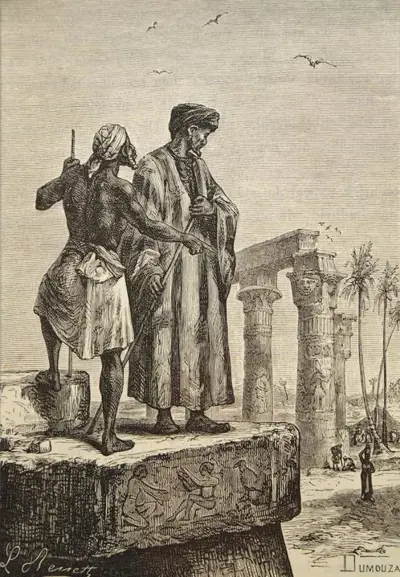
Ibn Battuta was a Muslim Berber-Moroccan scholar, jurist and explorer who widely travelled the Old World, largely in the lands of Dar al-Islam, travelling more than any other explorer in pre-modern history, totalling around 117,000 km (72,000 miles), surpassing Zheng He with about 50,000 km (30,000 miles) and Marco Polo with 24,000 km (15,000 miles). Over a period of thirty years, Ibn Battuta visited most of the Old World, including Central Asia, Southeast Asia, South Asia, China and the Iberian Peninsula. Near the end of his life, he dictated an account of his journeys, titled A Gift to Those Who Contemplate the Wonders of Cities and the Marvels of Travelling, but commonly known as The Rihla.
