Muhammad Abduh Quotes
New and useful sciences are essential to our life in this age and are our defense against aggression and humiliation.
Muhammad Abduh, 1849-1905, Egyptian jurist, historian, political scientist, religious scholar and liberal reformer, Mufti of the Egyptian Realm, Editor and Chief of al-Waqāʾiʿ al-Miṣriyya (The Eyptian State Newspaper), Known as “The founder of Islamic Modernism”
Sourced by: Eigen's Political and Historical Quotations


This view is typical of most religiously educated Muslims and accounts in large part for the fact that the Islamic world is so scientifically backward—especially in the context of the great Islamic scientific development around 1000 AD. Religiously Islam closed and so did the entire outlook of the people, and the existing religious norm accounts for most of the backwardness of Islamic lands.

Islamic modernists like Serageldin are many among the educated Muslims but their views are often drowned out by the violence and extremist statements of the fundamentalists. Ironically, the necessary intellectual freedom existed in the Islamic world one thousand years ago and Islamic science and other learning was as advanced as any and superior to most including the Christians.


Ataturk as part of his radical reforms elevated secular teachers to a very high social status and moved science and engineering into the curriculum over the objections of traditionalists and Islamic fundamentalists, and he did this in an overwhelmingly Muslim country.


First Muslim to win the Nobel Prize

Traditional Islamic education of the time only dealt with the Koran but the skills of modern life, medicine, law, science were taught in the British secular schools, which Muslims generally would not attend. Kahn urged all is fellow Muslims to benefit from all forms of education.

This principle characterized most Islamic cultures for the next 400 years while Christian Europe was in the Dark Ages and had ignored most of the accumulated Western knowledge of the Greeks and Romans, The Muslims however, kept this knowledge alive and added to it supporting great mathematicians, scientists, philosophers, theologians and physicians. During the 12th century extreme fundamentalists gained control over Islam and this great principle of Umar’s was not only ignored but those who acquired new knowledge were persecuted as “innovators” often a capital crime. When Christian Europe began to rise intellectually, the Muslim societies were declining. Even today, the Islamic cultures are split as to the value of new knowledge and while there are modern Muslim scholars and scientists, there are still major forces throughout Islam who consider knowledge that is not in the Koran or which contradicts the Koran not only false, but heretical, often to be punished even by death.


Earlier in the Arab-Israeli conflict United Nations troops were stationed at the borders to prevent either side from attacking the other. The Arabs mounted a major attack and the United Nations troops ran and did not fight. Ever since then, Israel policy was never to depend on any other than Israel to defend the country and the people.


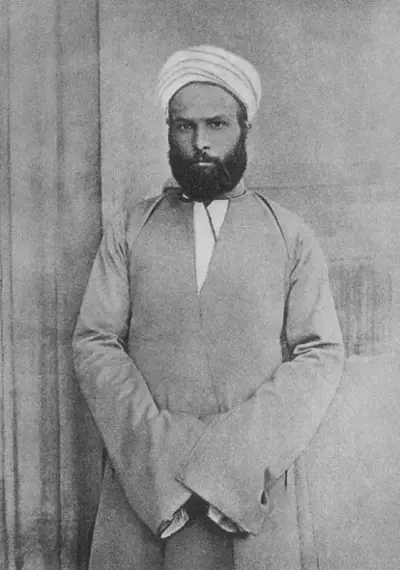
Muḥammad 'Abduh (also spelled Mohammed Abduh, Arabic: محمد عبده) was an Egyptian Islamic scholar, jurist, theologian, mujaddid, Freemason, and writer. He also wrote, among other things, "Treatise on the Oneness of God", and a commentary on the Quran. He briefly published, alongside Jamāl al-Dīn al-Afghānī, the Pan-Islamist anti-colonial journal Al-Urwah al-Wuthqa.
