Charles V, Holy Roman Emperor Quotes
License for the introduction of Negroes to the Number of Four Hundred
This license was issued for Spain in 1517 shortly after he was crowned. This was the beginning of the Slave Trade where Spain shipped kidnapped Africans as slaves to the West Indies.
Charles V, Holy Roman Emperor License Issued in 1517
Sourced by: Eigen's Political and Historical Quotations

See the Vermont Constitution for another variant of how slavery was abolished: {616994}


This treaty shows slaves were a major currency of the times and cultures. The Arab Armies of Egypt and the Nubians with this treaty declared an armistice. The extensive Arab use of Black slaves officially begun at this time, has plagued Africa since. Arab slave traders were the middle men who met the European and American demand for slaves until the 19th century. Even at the millennium the Sudanese civil war between the Arab North and Black South has reflected this resentment and hostility and has involved the Northerner’s enslaving tens of thousands of Black Southerners.

In contrast to Massachusetts with had passed a law in 1641 banning slavery (Quote 643567), Maryland 22 years later became to first state to pass a law to formally recognize and allow Negro slavery.

The first anti-slavery newspaper published in the United States & the first journal in America to advocate immediate, unconditional emancipation

Many people are surprised that such an anti-slavery could have passed given the Southern states’ position regarding slavery. However, this resolution did not end slavery—just American participation in the slave trade. This would have actually increased the value of the existing slaves in the colonies as “cheap imports” would no longer depress the value of American slaves. The Southern perception was there were enough slaves for their needs and they could breed more. The other states, generally opposing slavery took what they could get---a ban on the slave trade. A major economic fact of the time was the vast majority of the slave trade imports were going to the British Colonies in the Caribbean. Cutting off the American slave trade would do much more harm to the economic interests of Britain than the United States where the only people economically hurt would be the Yankee captains and slave traders who were not very popular of politically connected except in Rhode Island.
Louisiana to this day has a different legal system from the rest of the United States as it was originally based on the French Napoleonic Code. Most people did not realize that Louisiana had strictures against breaking up families—even with slaves.

In the early days of the Civil War slaves who escaped and reached the Northern lines were routinely returned to their Southern owners as the Fugitive Slave Act required. The first actual emancipation of the Civil war was not the President’s proclamation but was Butler who as a Union General ordered that the slaves escaping from Virginia no longer be returned. He was accused of violating the then existing law, however he had a legal rationale which hoisted Virginia on its own petard.

He was the last Pope to hold temporal power. This defense of slavery was all the more surprising because America was fighting about the issue in the Civil War and nations like England had abolished slavery. 99 years later Vatican II altered Pius IX’s statement forever. See {612715}.

The Mormons were in Missouri at the time. Phelps was warning the church members essentially not to get involved with the slavery issue. The Mormon Church tended to support the institution of slavery at that time although Mormons themselves did not own slaves. However, we should remember that the Mormons themselves were a very persecuted group and Phelps and other Church leaders probably didn’t want their members alienating the non Mormons more than they already did by their existence. This was very similar to the Roman Catholic Church leaders at the time. The Catholics were also a persecuted minority and the Catholic Bishops often supported slavery—especially in the South to try and avoid hostility from the power structure and the majority. Some individual Mormons and individual Catholics were much opposed to slavery. See {629158} and {629154} for more on the Mormons and slavery. Later, Smith altered his early view.

In this case, the Pope was obeyed on the issue of slavery. However, Papal injunctions against slavery have not always had the desired effect. See {617632}

A few years later he had a clearer idea of what was to be done. However, the additional factor of the Civil War played a big part in driving his Emancipation Proclamation. See {609360}

This quotation illustrates the strong abolitionist tendency in the Ohio Territory. Under this clause, escaped slaves from Southern states would not be returned by the state authorities. Even more insulting to the slave enthusiasts of the South, if a Southerner brought any slaves into Ohio with them as was common for Southerners traveling with their personal slaves or horse team drivers, those slaves would be free. An interesting aspect of this clause of the Ohio Constitution was that the beginning was, word for word, copied from the Northwest Ordinance of 1787. See {618100}.

Van Buren was Ambassador to England at the time.

Brown was the richest man in Rhode Island and made much of his money in the slave trade. This quotation shows that slavery was not completely a North verses South split. Northerners like Brown for whose family Brown University was named, was as virulent supporter of slavery as the most ardent Southerner.

The cotton industry and slavery were a very important part of the economy of Providence, RI. The Rhode Island cotton mills were supplied by Southern cotton produced by slaves and carried from the South on Rhode Island ships. Many of the southern slaves were kidnapped from Africa from Rhode Island slave trading ships. When the slave trade was made illegal, Brown was the first slave trader prosecuted. His brother, Moses Brown, a vehement abolitionist was one of the men who brought the prosecution.

There was a committee proposal to terminate the importation of slaves in 1800. There was a majority for this, but Mr. Randolph proposed that the time be extended to 1808, 20 years thence.
Often referred to as “The Dean of Black Historians.”. Although critical of the behavior of Africans involvement in the slave trade, Person-Lynn maintains that there was a qualitative difference between African concepts of slavery where the enslavement was conceptually of human beings whereas the chattel slavery of the Atlantic trade considered the slaves as sub-human property. It is arguable as to which of the two views is the greater moral failure, but many regard it as a difference not worth much in that both views were grossly immoral and had devastating consequences for a large number of people.
He was not correct that all sects and nations have agreed that slavery is desirable. The Jews escaping from Egypt, the early American and British religious sects that were strong abolitionists were examples. However, there were relatively few exceptions and generally, the Sultan had it right.
Most of us think the California was not a slave state, but in the early 1850s the California law (such as it was) allowed a slave owner to “sojourn” in California with his property that could include slaves. A number of Southern save owners took slaves to the California gold fields to do mining. There was a great deal of resentment on the part of the other miners and the free labor of the territory. In 1855, slavery in California was abolished.

This clause was superseded by the 13th Amendment {621373}. More and more abolitionists were refusing on ethical and moral grounds to return fugitive slaves. Some states actually passed laws forbidding the return of fugitive slaves and freeing them the second they set foot in the state. Some objected arguing that the law must be enforced and the Constitution obeyed. They had a point, so the solution was to change the Constitution which is what was done in 1865.

There was little thought of emancipating slaves or their value to the South by the senior officers of the Union Army at the beginning of the war. The Secretary of War however changed that. See {629184}.
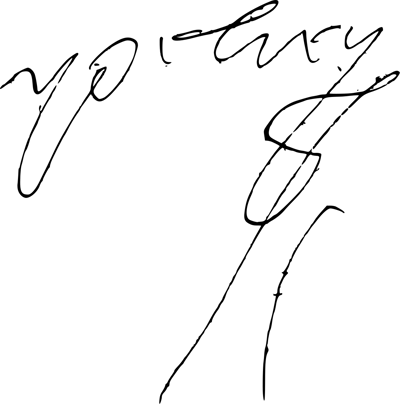
Charles V (Spanish: Carlos; French: Charles; German: Karl; Dutch: Karel; Italian: Carlo) was ruler of both the Spanish Empire from 1516 and the Holy Roman Empire from 1519, as well as of the Habsburg Netherlands from 1506. He voluntarily stepped down from these and other positions by a series of abdications between 1554 and 1556. Through inheritance, he brought together under his rule extensive territories in western, central, and southern Europe, and the Spanish colonies in the Americas and Asia. As a result, his domains spanned nearly four million square kilometers and were the first to be described as "the empire on which the sun never sets.”
