Jeff Bingaman Quotes
It is reasonable to insist that when the government deprives a person of his or her liberty? and in this case for an indefinite period of time? that the individual have a meaningful opportunity to challenge the legality of their detention and challenge whether they are being wrongfully detained.
Bingaman, Jeff. "Military Commissions Act of 2006." Congressional Record, vol. 152, 28 Sept. 2006, p. S10403.


Federal officials and commissioners issued laws, directives and orders that were very unpopular with the Mormons who were in the overwhelming majority of the Utah territory. The Mormon “government” was a type of theocracy but a very popular one. The Mormons tried to test the constitutionality and legality of the Federal laws and orders before they would obey. The government position was that they should obey and then could test the laws in the courts. The Mormons eventually lost in the courts anyway, but the principle of obedience to law until it can be tested and reversed has generally been the rule of U. S. Law. However, civil disobedience in which many religions have engaged in our history argues the obverse. Eventually Taylor had to go “underground” and rule the church from exile in which state he died.


See {42210}, {626788}, {626784}. Palmer had been a potential Presidential candidate until his excesses ended that possibility.


Mosley had been incarcerated without charges or trial under the “national emergency” of the Second World War. This prevented him from organizing his “Blackshirts.” When it was clear that Germany would lose the war, Oswald was released, but without the prospect of Fascism dominating continental Europe, there was little interest in Fascist movements in England.

In the aftermath of 9-11, there was a call for giving the law enforcement agencies more authority and the Patriot Act was passed in haste and fear. Some law enforcement personnel then went about picking up Arab Americans and in many cases holding them incommunicado without any charges. No terrorists were discovered by this process and yet good American citizens were abused, traumatized and insulted. In our zeal to protect American freedom, we actually began to resemble some of the capricious and abusive practices of our undemocratic enemies. There were other abuses allowed under the Patriot Act, but at the time of this writing the extent had not yet been revealed, but the refusal of the authorities to make public the national security benefits suggests that there was not much national security benefit and much abuse.


Johnson, fundamentally an inveterate racist, tried to kill all attempts at protecting Negro rights after the Civil War. Congress rewrote the Bill to obtain enough signatures and then passed it over the President’s Veto later in the year.

While in general this is a reasonable view. The Supreme Court is supposed to deal with the big issues of the law. However, in this case, the “fact” was very strong evidence that another person committed a murder and not the man who was convicted. He even confessed. How critics asked could it be constitutional to execute an innocent man. See {635414} for one of the sharpest dissents in court history.


The choice is usually contrasted between guilty persons going free, rather an innocent one be adjudicated guilty. But here the justice tells us that the avoidance of an innocent person being subject to easy arrest is important enough to have a system where guilty people sometimes escape justice.

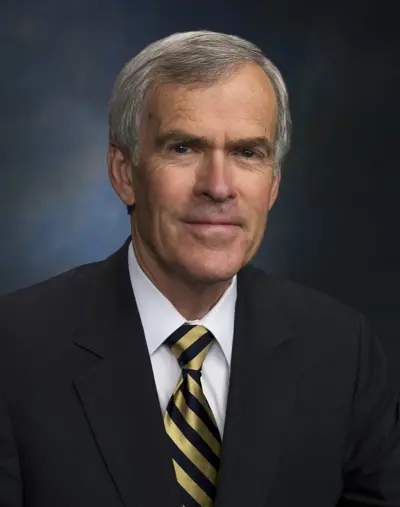
Jesse Francis "Jeff" Bingaman Jr. is an American politician who served as a United States Senator from New Mexico from 1983 to 2013, for 5 terms. A member of the Democratic Party, he served as Chairman of Committee Outreach for the Senate Democratic Caucus. Previously, Bingaman was Attorney General of New Mexico from 1979 to 1983. On February 18, 2011, he announced that he would not seek reelection in 2012. He was succeeded by Democratic US Representative Martin Heinrich. During his time in the Senate, Bingaman served as the long time chair of the Senate Energy Committee.
