John Winthrop Quotes
No man's life shall be taken away; no man's honor or good name shall be stained; no man's person shall be arrested, restrained, banished, dismembered, or any ways punished; no man shall be deprived of his wife or children; no man's goods or estate shall be taken away from him, or any way damaged, under color of law or countenance of authority, unless it be by the virtue or equity of some express law of the country, warranting the same, established by a General Court and sufficiently published
John Winthrop, 1588-1649, Puritan Clergyman, Governor, Massachusetts Bay Colony, Arbitrary government described and the Government of the Massachusetts vindicated from that aspersion, 1644
Sourced by: Eigen's Political and Historical Quotations

The call for individual liberty and the right of personal property by clergy is surprising to many. This Cahier was the consensus of the Clergy of Blois in 1789. There were cahiers of several provinces of France—some by the clergy, some by the nobles. What is fascinating is the emergence of many of the pre-Revolutionary French concepts. The example of the American revolution and its principles was known throughout the educated classes of France.


Sealed under duress and later repudiated by the King with Papal assistance


The first Civil Rights Act {587712} was passed a few months before and has some of the same language as Congress wanted to make the laws very clear. The Southern Rebels who insisted on their right to have guns during Reconstruction, viciously denied that same right to the newly freed slaves. Sickles tried to remedy this, but the KKK and other terrorists intimidated most of the Blacks into not using the right that they had. Later, they would do that with the right to vote. In January, the Commanding General in charge of South Carolina had issued an order protecting the rights of Blacks to have guns {629894}. This law applied that to the entire country. The Southerners have always supported the 2nd Amendment except when Blacks wanted to have arms.


The Jury Trial was part of New York Law more than a century before the Constitution.

He was considered Massachusetts’ greatest Colonial orator.


Note the use of the phrase “against the government.” One of the unique aspects of the American Constitution and The Bill of Rights is that the government is considered a potential and even probable infringer on the liberties of the people. It is almost as though the government was the potential enemy. Modern libertarians state this very explicitly and it is ever present in the views of both the right and left wings of American politics. Most centrists recoil at the thought that some citizens see the government as the enemy, but even in America there have been times where the government has infringed on the rights of citizens only to have the courts or future administrations and Congresses correct the error.
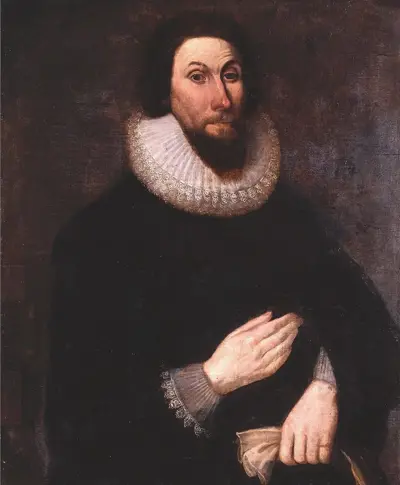
John Winthrop was an English Puritan lawyer and one of the leading figures in founding the Massachusetts Bay Colony, the second major settlement in New England following Plymouth Colony. Winthrop led the first large wave of colonists from England in 1630 and served as governor for 12 of the colony's first 20 years. His writings and vision of the colony as a Puritan "city upon a hill" dominated New England colonial development, influencing the governments and religions of neighboring colonies.
