Jean-Baptiste Say Quotes
There is no security of property, where a despotic authority can possess itself of the property of the subject against his consent. Neither is there such security, where the consent is merely nominal and delusive.
Jean-Baptiste Say, 1767–1832, French economist and businessman, A Treatise on Political Economy, 1803
Sourced by: Eigen's Political and Historical Quotations


Sealed under duress and later repudiated by the King with Papal assistance. This, before Magna Carta, was a common occurrence especially by the military. In many countries, even in modern times, this restriction does not exist. The resentment developed from this practice was a major factor in the Chinese people turning in the Nationalist government in favor of the Communists after WWII. Mao Tse-Tung's soldiers always paid for what they took or used if not donated freely. Not so Chiang's military." John Lackland

The call for individual liberty and the right of personal property by clergy is surprising to many. This Cahier was the consensus of the Clergy of Blois in 1789. There were cahiers of several provinces of France—some by the clergy, some by the nobles. What is fascinating is the emergence of many of the pre-Revolutionary French concepts. The example of the American revolution and its principles was known throughout the educated classes of France.

Sealed under duress and later repudiated by the King with Papal assistance


This was written during the George W. Bush Administration where the reaction to 9-11 was to curtail some civil rights and constitutional protections in favor of more national security. Bush was not the only President who eroded civil rights in a fear for National Security. FDR interned the Japanese Americans. Woodrow Wilson jailed pacifists who protested against the draft. John Adams passed the infamous Alien & Sedition Acts.


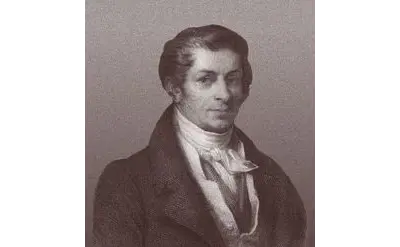
Jean-Baptiste Say was a liberal French economist and businessman who argued in favor of competition, free trade and lifting restraints on business. He is best known for Say's law—also known as the law of markets—which he popularized. Scholars disagree on the surprisingly subtle question of whether it was Say who first stated what is now called Say's law. Moreover, he was one of the first economists to study entrepreneurship and conceptualized entrepreneurs as organizers and leaders of the economy.
