William Penn Quotes
In France, and other nations, the mere will of the Prince is Law, his word takes off any man's head, imposeth taxes, or seizes any man's estate …. In England the Law is both the measure and the bound of every Subject's duty and allegiance, each man having a fixed Fundamental Right born with him, as to freedom of his person and property in his estate, which he cannot be deprived of, but either by his consent, or some crime, for which the law has imposed such a penalty or forfeiture.
William Penn, 1644-1718, Founder of Pennsylvania, The Excellent Priviledge of Liberty and Property Being the Birth-Right of the Free-born Subjects of England, 1687
Sourced by: Eigen's Political and Historical Quotations


money for the king's government In 1628 there was a classic English struggle between the king, Charles I, and Parliament. While Parliament was sitting, Dr. Manwaring, an Anglican Bishop, preached a sermon. He claimed that God intended all private property to be at the disposal of the King in times of national emergency. Further, that the King could levy an taxes without the consent of Parliament. The King liked the sermon so much that he had it printed and distributed by special command. The House of Commons went bonkers and impeached Manwaring. He was imprisoned by order of the House, fined the then huge sum of 1,000 pounds, and prohibited from holding any ecclesiastical or secular office in the future. As soon as the session of Parliament ended, the king pardoned him, gave him a huge salary raise, and several years later Manwaring was appointed Bishop of Asaph. King Charles I, perhaps England’s worst sovereign, then provoked two civil wars and was finally tried for treason and beheaded. Manwaring was in and out of prison during the conflicts. He faded from public view.


This Cahier was the consensus of the Clergy of Blois in 1789. There were cahiers of several provinces of France—some by the clergy, some by the nobles. What is fascinating is the emergence of many of the pre-revolutionary French concepts. The example of the American revolution and its principles was known throughout the educated classes of France.


To the pro-slavery politician, abolition was an abdication of government to fulfill it’s 3 major responsibilities. Slaves were private property and government had to safeguard the owner’s right to own that property. Slave owners had always been free in America to hold slaves, and abolition impinged on that freedom. And the slavery advocates knew better than the abolitionists how cruelly the slaves had been treated. They reasoned—that if anyone had treated them that way, they would if they could take revenge and kill the slave owners. Therefore, abolition threatened the lives of Southern citizens. Of course, Brown and his fellow slave-owners did not consider the fact that they had interfered with the right of the slave to own property, they denied him freedom, and in many cases killed slaves as examples or out of neglect. Their “logic” was that slaves were not citizens and therefor were not entitled to these protection.

In many countries, the king received all land and most property upon the death of a landowner.


Rynnymede was the location in England where the Barons of the realm confronted King John and forced him to sign the Magna Carta. This was the first event that limited the powers of the King


The call for individual liberty and the right of personal property by clergy is surprising to many. This Cahier was the consensus of the Clergy of Blois in 1789. There were cahiers of several provinces of France—some by the clergy, some by the nobles. What is fascinating is the emergence of many of the pre-Revolutionary French concepts. The example of the American revolution and its principles was known throughout the educated classes of France.

This was the first contact between the colonists and the French government. The French agent was very non committal and the parties were just feeling each other out. Franklin made it perfectly clear that the colonists would not trade the English King for a French one and become part of the French empire.
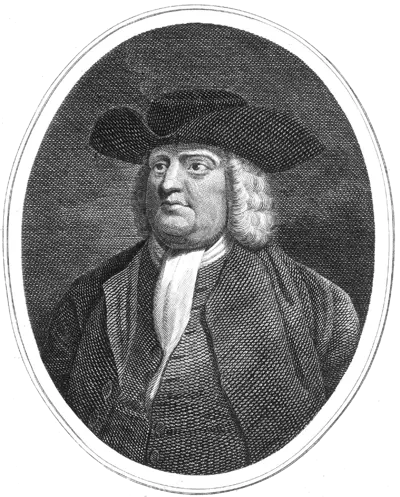
William Penn was an English writer and religious thinker belonging to the Religious Society of Friends (Quakers), and founder of the Province of Pennsylvania, a North American colony of England. He was an early advocate of democracy and religious freedom, notable for his good relations and successful treaties with the Lenape Native Americans. Under his direction, the city of Philadelphia was planned and developed. Philadelphia was planned out to be grid-like with its streets and be very easy to navigate, unlike London where Penn was from. The streets are named with numbers and tree names. He chose to use the names of trees for the cross streets because Pennsylvania means "Penn's Woods".
