King James I Quotes
All kings that are not tyrants, or perjured, will be glad to bound themselves within the limits of their laws.
James I, 1566-1625, King of Great Britain & Scotland, Statement to Parliament, 1609
Sourced by: Eigen's Political and Historical Quotations

Prior to Cooke’s indictment of English King Charles I, there was a concept of Royal Impunity—that a sovereign could not legally be called to account for his actions as ruler of the state. The concept of “sovereign immunity” was a concept where the sovereign and his agents could be given immunity for specific actions, but they never would have impunity again where there were no limits to the crimes they might commit against their own people. Charles I refused to even recognize Cooke’s indictment and so have heads of state called to account for their major crimes since then all the way down to Saddam Hussein in 2006 who made the same argument. Cooke was himself hanged, drawn and quartered almost 20 years after the Charles I trial for his part in the “Regicide” so the concept of Royal Impunity did not die quickly.


If men's minds were as easily controlled as their tongues, every king would sit safely on his throne
Spinoza’s ideas were considered so radical and dangerous that he was the only man in history who was excommunicated by the Catholics, the Jews and the Muslims.


The statement so offended the Lords—the highest court of England—that he was imprisoned by the Lords and not released until he had recanted the position. The argument goes on today in many countries incuding the United States.

“Somsteu” was the name the Africans gave to Theophilus Shepstone, 1817-1893, British Colonial African Administrator.


James just before he became king was very much aware of the unpopularity of the concept of sovereign immunity and the danger of an English King acting against traditional law of the land however, James did not wish to set at precedent that the king was bound by any way and subject the law of his inferiors. He seemed to find a brilliant solution:

She was Queen of Scotland and claimed the English throne as well. While Elizabeth I was on the throne of England, Mary claimed that the court had no jurisdiction over an absolute monarch. Her son was in France at the time but eventually succeeded to the Scottish throne as James VI and the English throne as James I.


The revolution turned on many of its initiators including Vergniaud. He was guillotined along with other Girondists.


The Visigoth king was, like other kings all powerful but within certain traditions. Whereas other kings were crowned with a concept of Divine Right, the Visigoth king’s reign was formally contingent on his performance.


Magistrates included not only judges but mayors, governors and other Executive officials appointed by the King. The President of the United States is often referred to as the “Chief Magistrate”. At the time, Baptists taught that authorities were acting for God therefore must be obeyed.

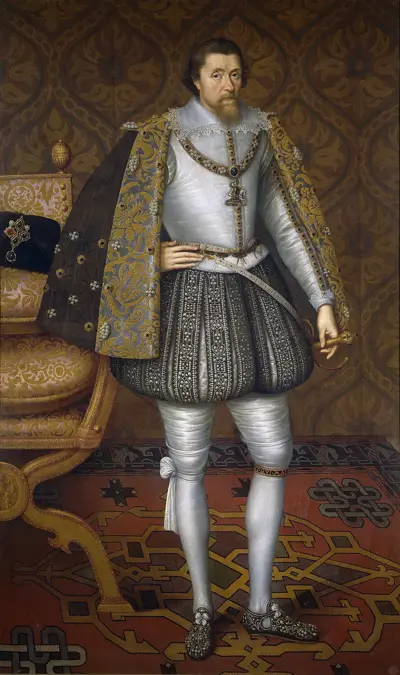
James VI and I was King of Scotland as James VI from 24 July 1567 and King of England and Ireland as James I from the union of the Scottish and English crowns on 24 March 1603 until his death in 1625. The kingdoms of Scotland and England were individual sovereign states, with their own parliaments, judiciaries, and laws, though both were ruled by James in personal union.
