Visigoths Quotes
Thou shalt be king so long as thou dost do right; but if thou do not do right, thou shalt no longer be king.
The Visigoth king was, like other kings all powerful but within certain traditions. Whereas other kings were crowned with a concept of Divine Right, the Visigoth king’s reign was formally contingent on his performance.
Visigoths, Statement made by whatever authority crowed a Visigoth King, ~650
Sourced by: Eigen's Political and Historical Quotations


The revolution turned on many of its initiators including Vergniaud. He was guillotined along with other Girondists.


This is the most formalized and sophisticated compendium of laws of the so-called “barbaric peoples” of Europe. The compilation was in many ways a documentation of the traditional laws of the Visigoths that had evolved over hundreds of years.

Not all kings were uncaring aristocrats and a few were excellent, compassionate, rulers. Most were not however.


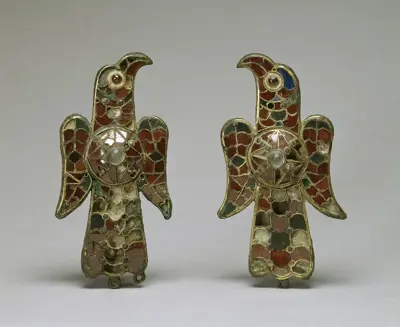
The Visigoths (/ˈvɪzɪɡɒθs/; Latin: Visigothi, Wisigothi, Vesi, Visi, Wesi, Wisi) were an early Germanic people who, along with the Ostrogoths, constituted the two major political entities of the Goths within the Roman Empire in Late Antiquity, or what is known as the Migration Period. The Visigoths emerged from earlier Gothic groups, including a large group of Thervingi, who had moved into the Roman Empire beginning in 376 and had played a major role in defeating the Romans at the Battle of Adrianople in 378. Relations between the Romans and the Visigoths were variable, alternately warring with one another and making treaties when convenient. Under their first leader, Alaric I, they invaded Italy and sacked Rome in August 410. Afterwards, they began settling down, first in southern Gaul and eventually in Hispania, where they founded the Visigothic Kingdom and maintained a presence from the 5th to the 8th centuries AD.
