William J. Brennan Jr. Quotes
There exists in modem America the necessity for protecting all of us from arbitrary action by governments more powerful and more pervasive than any in our ancestors’ time.
William J. Brennan, Jr., 1906-1997, U. S. Supreme Court Justice, “State Constitutions and the Protection of Individual Rights,” Harvard Law Review, 1977
Sourced by: Eigen's Political and Historical Quotations


While this was a strong central political principle for Reagan, a substantial part of his political party strongly advocated the against the government interjecting itself into people’s lives.


See also Gerald R. Ford for a later similar expression.


This view causes great problems for Republicans and Tea Party members in that they share this and a few other particular views with the race haters like Lane. Many tend to conflate the viewpoints—especially when KKK and Aryan Nation members show up at Tea Party Rallies. Also, the extreme hyperbolic rhetoric. Someone who disagrees supports “tyranny” and is not a fellow citizen.
The Grammar Curmudgeon
The Grammar Curmudgeon. Almost every government action to protect rights impinges on the rights of some. For example, laws to protect minorities from discrimination in the workplace impinge on the right of employers to hire whomever they want. The Voting Rights Act eliminating the Poll Tax instituted to prevent Negroes from voting, impinged on the Southern States’ rights to determine the election rules and standards for their states. Laws requiring all pharmaceuticals to be approved by the Food and Drug Administration to protect the public from dangerous drugs interfere with the doctor’s and patient’s rights to determine the best treatment and the drug company’s right to sell whatever products they want.

He was the Chairman of the Senate Judiciary Committee. The Islamic fundamentalist terrorists are repugnant to us because they have no respect for Civil and Human Rights and would deny us what we value so highly and for which so many Americans have sacrificed. We are little better off if we surrender our civil rights in order to cope with the problem of losing our civil rights to the likes of the Taliban and Al Qaeda.

Snowden, was a contract worker for Booz Allan assigned to the National Security Agency (NSA). He felt that some of the NSA activities were illegal and unethical and tried to complain to NSA officials who rebuffed him. Despite the fact that he had signed an agreement not to do so, he copied many critical, classified documents that exposed much of the NSA activities that the NSA officials had denied existed—including lying under oath to the Senate. He then made many of them public, violating his oath, breaking the law, and opening up an entire area of government spying which most Americans knew nothing about and about which senior government officials had lied under oath to Congress. They of course wanted to prosecute Snowden who had told the truth, while they had lied. For many Americans, this became a moral and ethical conundrum.

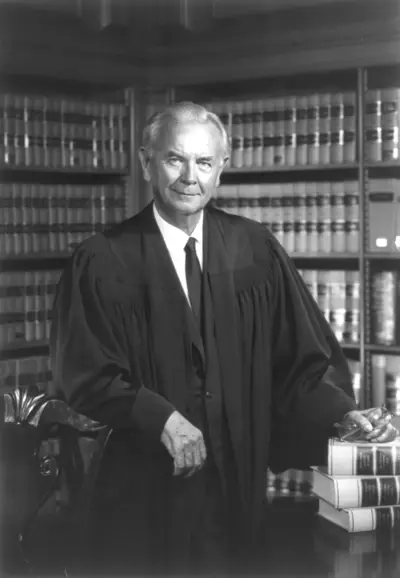
William Joseph Brennan Jr. was an American lawyer and jurist who served as an Associate Justice of the United States Supreme Court from 1956 to 1990. He was the seventh-longest-serving justice in Supreme Court history, and known for being a leader of the Court's liberal wing.
