Oliver Ellsworth Quotes
A government capable of controlling the whole, and bringing its force to a point, is one of the prerequisites for national liberty. We combine in society, with an expectation to have our persons and properties defended against unreasonable exactions either at home or abroad.
Ellsworth, Oliver. "A Landholder, No. III." Essays on the Constitution of the United States, Published During Its Discussion by the People, 1787-1788, edited by Paul Leicester Ford, Historical Printing Club, 1892, p. 149.


L. P. Jacks


To the pro-slavery politician, abolition was an abdication of government to fulfill it’s 3 major responsibilities. Slaves were private property and government had to safeguard the owner’s right to own that property. Slave owners had always been free in America to hold slaves, and abolition impinged on that freedom. And the slavery advocates knew better than the abolitionists how cruelly the slaves had been treated. They reasoned—that if anyone had treated them that way, they would if they could take revenge and kill the slave owners. Therefore, abolition threatened the lives of Southern citizens. Of course, Brown and his fellow slave-owners did not consider the fact that they had interfered with the right of the slave to own property, they denied him freedom, and in many cases killed slaves as examples or out of neglect. Their “logic” was that slaves were not citizens and therefor were not entitled to these protection.


Samuel Langhorne Clemens, 1835-1910. Even in a democracy, governments often enact laws that the public disapproves of and fails to enact others that the public wants. Most taxes are examples of the former; gun control legislation, of the latter.


See also Gerald R. Ford for a later similar expression.

American law is more ambiguous on this point.


Compare John C. Calhoun's Liberty Dearer Than Union.
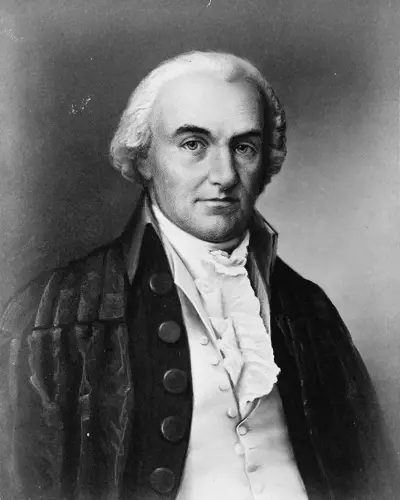
Oliver Ellsworth was an American lawyer, judge, politician, and diplomat. He was a framer of the United States Constitution, a United States Senator from Connecticut, and the third Chief Justice of the United States. Additionally, Ellsworth received 11 electoral votes in the 1796 presidential election.
