Mark Twain Quotes
...nations have no command over their governments, & in fact no influence over them, except of a fleeting & rather ineffectual sort.
Samuel Langhorne Clemens, 1835-1910. Even in a democracy, governments often enact laws that the public disapproves of and fails to enact others that the public wants. Most taxes are examples of the former; gun control legislation, of the latter.
Mark Twain, Writer, Founder, Anti-Imperialist League, Letter to Baroness von Suttner, February 17, 1898
Sourced by: Eigen's Political and Historical Quotations


In the Watergate crisis H. R. Haldeman had asked for a Presidential pardon. A discussion of the request was held by some White House staff members:


This constitution, 13 years later, became the basis for the national Batavian Constitution.


This quotation had a close proximity to Lincoln’s Gettysburg Address (see linked quote). Although this was probably Lincoln's most famous line, it was not totally original. John Adams came close in a 1774 proclamation (see linked quote). As did John Marshall in his McCulloch v. Maryland decision (see linked quote). There was also Thomas Cooper in 1795 (see linked quote). But the earliest close phrase use appears to be the English cleric, John Wycliffe, in 1382 (see linked quote). It is not known with which of these Lincoln was familiar.
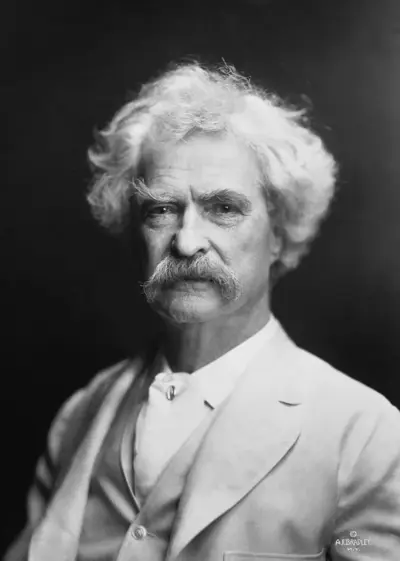
Samuel Langhorne Clemens, known by his pen name Mark Twain, was an American writer, humorist, entrepreneur, publisher, and lecturer. He was lauded as the "greatest humorist the United States has produced," and William Faulkner called him "the father of American literature". His novels include The Adventures of Tom Sawyer (1876) and its sequel, the Adventures of Huckleberry Finn (1884), the latter often called "The Great American Novel".
