Frederick Douglass Quotes
The arm of the Federal government is long, but it is far too short to protect the rights of individuals in the interior of distant States. They must have the power to protect themselves, or they will go unprotected, in spite of all the laws the Federal government can put upon the national statute-book.
Frederick Douglasss, ~1817-1895, Abolitionist & Editor, Recorder of Deeds, District of Columbia, U. S. Minister to Haiti, December 1866
Sourced by: Eigen's Political and Historical Quotations

In addition, most state and local corrupt officials are detected, and prosecuted by Federal law enforcement officials as local and sometimes state corruption involves the local and state law enforcement officials as well as others so local authorities often turn a blind eye towards corruption.


The Grammar Curmudgeon. Almost every government action to protect rights impinges on the rights of some. For example, laws to protect minorities from discrimination in the workplace impinge on the right of employers to hire whomever they want. The Voting Rights Act eliminating the Poll Tax instituted to prevent Negroes from voting, impinged on the Southern States’ rights to determine the election rules and standards for their states. Laws requiring all pharmaceuticals to be approved by the Food and Drug Administration to protect the public from dangerous drugs interfere with the doctor’s and patient’s rights to determine the best treatment and the drug company’s right to sell whatever products they want.

The Beltway refers to a ring highway around Washington DC. Almost all government offices are inside the Beltway and this is a euphemism for the Federal Government in Washington DC.


This is a very important political, historical, and philosophical quotation. This is a view that is very common amongst many Americans—especially those who are religious. As a factual matter, it is not clear that ALL the founding fathers personally believed in the creator--God. All the views have never been discerned. However it is almost certain that the majority of the Founders so believed. The complication with taking this viewpoint too literally is that while our rights may have come from God, it is men who determined exactly what rights would be enumerated on our constitution. For example. the original draft of the Constitution did not include, the right to a free press, the right of due process, the right of being free from religious compulsion and others. Yet it passed. Then other men and women wanted more rights added and the Constitution was ratified on condition that the Bill or Rights would be incorporated as the first 10 amendments. There were other rights that were not explicitly mentioned. For example, there is no right to an education mentioned in the Constitution or any of the amendments. Blacks had no rights until additional amendments were passed. And later there was an amendment that denied Americans the right to drink alcohol. Then another that gave the rights back. There are rights that other nations have which we do not—ie the right to medical care. Which if these did God grant and which, not? So even if we assume that every one of the founding fathers not only believed in God, but believed the rights were all God given, we would still be in the practical dilemma of having to specify the language of each right and always to, by amendment, adding additional rights or modifying or even deleting older rights. Many believe that Americans were divinely inspired when we added (or changed) rights. Others, not. However, regardless, we must go through the same procedures of enumerating American rights and amending the constitution. So the process is the same for both those who believe that our rights come from God and those who do not. To change rights, we need the action of Americans divinely inspired or otherwise, but they can and have been changed. For example, before 1963 Americans did not have a right to use birth control devices. After the Supreme Court Griswald v. Conn. We did and now have a right to use birth control devices. The mode that rights are manifested, defined, enumerated and implemented is a political one—one that in our American system allows us all to implement that system whether or not we believe that our rights come from our Creator.


Explaining his civil rights strategy in the 1947 "Journey of Reconciliation:"


What was to become the 14th Amendment was being discussed. Several of the most radical Republicans drafted language that would allow Congress to make any law regarding life, liberty or property, so that they could be sure that the States would not make their laws in a discriminatory manner. However, Hotchkiss and the majority wanted to be sure the laws were not discriminatory but they didn’t want Congress to have the power to make any law regarding life, liberty and property for every state. The current version of the 14th Amendment just prohibited discrimination in laws, not empowering the Federal Government to override the state governments in most important areas.

President John Adams Alien and Sedition Acts were amongst the worst laws ever passed in America. It totally violated the First Amendment but at the time the Supreme Court had not ruled on the laws which prohibited criticizing the government. Ironically, it was Adams’s son, John Quincy Adams who finally led the repeal effort.

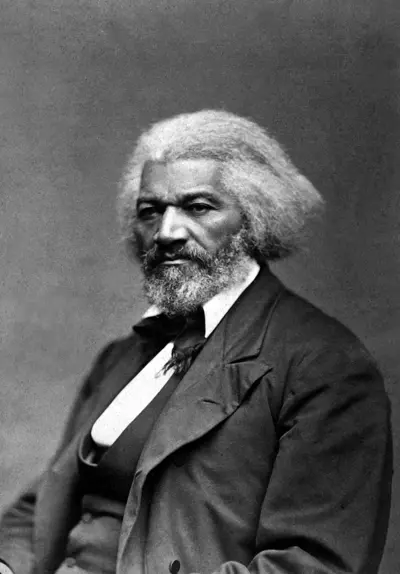
Frederick Douglass was an American social reformer, abolitionist, orator, writer, and statesman. After escaping from slavery in Maryland, he became a national leader of the abolitionist movement in Massachusetts and New York, becoming famous for his oratory and incisive antislavery writings. Accordingly, he was described by abolitionists in his time as a living counterexample to slaveholders' arguments that slaves lacked the intellectual capacity to function as independent American citizens. Likewise, Northerners at the time found it hard to believe that such a great orator had once been a slave.
