Marcus Tullius Cicero Quotes
…it is the peculiar function of the state and the city to guarantee every man the free and undisturbed control of his own particular property.
Marcus Tullius Cicero, 106 BC-43 BC, Roman Statesman & Philosopher, De officiis
Sourced by: Eigen's Political and Historical Quotations


See {587703} for a similar statement by a Supreme Court Justice.


The Catholic view on the subject varied from time to time, even with the same Pope. See {360616} for another quote from this Pope that gives a different point of view.


Sealed under duress and later repudiated by the King with Papal assistance. This, before Magna Carta, was a common occurrence especially by the military. In many countries, even in modern times, this restriction does not exist. The resentment developed from this practice was a major factor in the Chinese people turning in the Nationalist government in favor of the Communists after WWII. Mao Tse-Tung's soldiers always paid for what they took or used if not donated freely. Not so Chiang's military." John Lackland


The call for individual liberty and the right of personal property by clergy is surprising to many. This Cahier was the consensus of the Clergy of Blois in 1789. There were cahiers of several provinces of France—some by the clergy, some by the nobles. What is fascinating is the emergence of many of the pre-Revolutionary French concepts. The example of the American revolution and its principles was known throughout the educated classes of France.
What was to become the 14th Amendment was being discussed. Several of the most radical Republicans drafted language that would allow Congress to make any law regarding life, liberty or property, so that they could be sure that the States would not make their laws in a discriminatory manner. However, Hotchkiss and the majority wanted to be sure the laws were not discriminatory but they didn’t want Congress to have the power to make any law regarding life, liberty and property for every state. The current version of the 14th Amendment just prohibited discrimination in laws, not empowering the Federal Government to override the state governments in most important areas.


While this principle is widely accepted in modern America, in the early 20th century this was a view considered radical, socialist and even communistic by many of the leading businessmen in the nation. For a president to utter these words, much less a Republican President of a rich, upper class background.
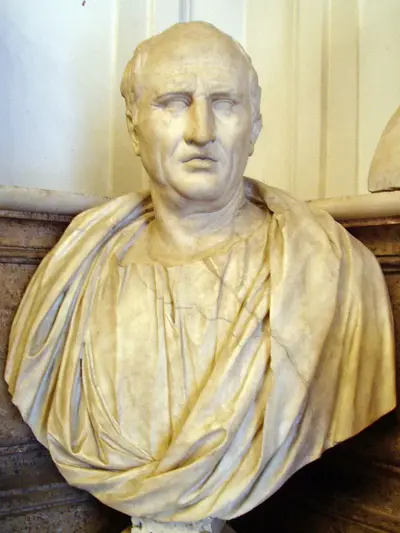
Marcus Tullius Cicero was a Roman statesman, orator, lawyer and philosopher, who served as consul in the year 63 BC. He came from a wealthy municipal family of the Roman equestrian order, and is considered one of Rome's greatest orators and prose stylists.
