Potter Stewart Quotes
In fact, a fundamental interdependence exists between the personal right to liberty and the personal right to property.
Stewart, Potter. Lynch v. Household Finance Corp. 405 U.S. 538. Supreme Court of the United States, 23 Mar. 1972, p. 552.

See {587703} for a similar statement by a Supreme Court Justice.


The call for individual liberty and the right of personal property by clergy is surprising to many. This Cahier was the consensus of the Clergy of Blois in 1789. There were cahiers of several provinces of France—some by the clergy, some by the nobles. What is fascinating is the emergence of many of the pre-Revolutionary French concepts. The example of the American revolution and its principles was known throughout the educated classes of France.


This statement summarized what had been a basic principle of American Law as derived from English law. See {587704}.


Sealed under duress and later repudiated by the King with Papal assistance. This, before Magna Carta, was a common occurrence especially by the military. In many countries, even in modern times, this restriction does not exist. The resentment developed from this practice was a major factor in the Chinese people turning in the Nationalist government in favor of the Communists after WWII. Mao Tse-Tung's soldiers always paid for what they took or used if not donated freely. Not so Chiang's military." John Lackland

Note the use of the phrase “against the government.” One of the unique aspects of the American Constitution and The Bill of Rights is that the government is considered a potential and even probable infringer on the liberties of the people. It is almost as though the government was the potential enemy. Modern libertarians state this very explicitly and it is ever present in the views of both the right and left wings of American politics. Most centrists recoil at the thought that some citizens see the government as the enemy, but even in America there have been times where the government has infringed on the rights of citizens only to have the courts or future administrations and Congresses correct the error.
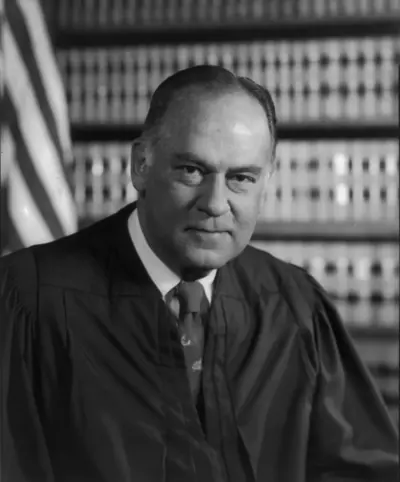
Potter Stewart was an American lawyer and judge who served as an Associate Justice of the United States Supreme Court from 1958 to 1981. During his tenure, he made, among other areas, major contributions to criminal justice reform, civil rights, access to the courts, and Fourth Amendment jurisprudence.
