Frederic Bastiat Quotes
If every person has the right to defend --- even by force --- his person, his liberty, and his property, then it follows that a group of men have the right to organize and support a common force to protect these rights constantly. Thus the principle of collective right --- its reason for existing, its lawfulness --- is based on individual right.
Frederic Bastiat, 1801-1850, French Political Economist, The Law, 1850
Sourced by: Eigen's Political and Historical Quotations


This statement summarized what had been a basic principle of American Law as derived from English law. See {587704}.

See {587703} for a similar statement by a Supreme Court Justice.


He had been a Congressman before assuming the Presidency. Civil rights was a major subject of debate after the Civil War. One major issue was that of citizenship itself. Many contended that Americans were citizens of a state and dependant on the state for the protection of civil rights. However, the extent to which the Federal government could and should be the guarantor of citizenship issues was in dispute. Today with the issue settled in favor of Federal preeminence, it is hard to realize that this was very unsettled at one point in history. Garfield was one of those leading the effort for more Federal involvement and control.

Americans General William Hull had crossed the Canadian border with 2500 men announcing his intention to invade. Fearing the military tactics of the Indians, he issued an edict stating that Indians (and whites fighting alongside Indians) would be shot rather than taken prisoner.


This was written and adopted by Vermont a decade before the United States Constitution the ideas for which were in existence in America before the Constitutional Convention in Philadelphia.


It was drafted by John Adams. 9 Years later the French in their Revolution used the first clause in their Declaration of the Rights of Man and of the Citizen—See Quotation 602404 For an opposite point of view see Quotation 635927.


Mackenzie was a British officer with whom Washington had become friends in the French & Indian War and in this letter, Washington was trying to explain the seriousness of the Boston rebellion for Britain.


By 1929 the Senate was debating legislation that would allow the government to control the airwave frequencies that were used by radio stations.


This quotation has been used by gay rights advocates. Opponents argue that a gay lifestyle is not “innocent” in that it is Biblically prohibited. This brings the issue of separation of church and state into the argument.
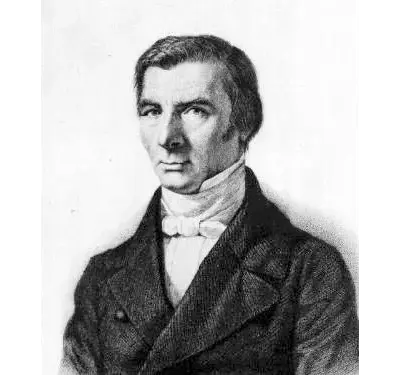
Claude-Frédéric Bastiat was a French economist, writer and a prominent member of the French Liberal School.
