John Farnsworth Quotes
What vested rights so high or so sacred as a man’s right to himself, to his wife and children, to his liberty, and to the fruits of his own industry? Did not our fathers declare that those rights were inalienable?
John F. Farnsworth, 1837-1863, U. S. Congressman (Republican, IL), Quoted in Nancy Cott, Public Vows, 2000
Sourced by: Eigen's Political and Historical Quotations

This quotation has been used by gay rights advocates. Opponents argue that a gay lifestyle is not “innocent” in that it is Biblically prohibited. This brings the issue of separation of church and state into the argument.

See {587703} for a similar statement by a Supreme Court Justice.
Those who support the right of the individual woman to use contraception or have an abortion cite this quotation to illustrate this early statement of the right of a person to have control over his or her own body.


This is a very important political, historical, and philosophical quotation. This is a view that is very common amongst many Americans—especially those who are religious. As a factual matter, it is not clear that ALL the founding fathers personally believed in the creator--God. All the views have never been discerned. However it is almost certain that the majority of the Founders so believed. The complication with taking this viewpoint too literally is that while our rights may have come from God, it is men who determined exactly what rights would be enumerated on our constitution. For example. the original draft of the Constitution did not include, the right to a free press, the right of due process, the right of being free from religious compulsion and others. Yet it passed. Then other men and women wanted more rights added and the Constitution was ratified on condition that the Bill or Rights would be incorporated as the first 10 amendments. There were other rights that were not explicitly mentioned. For example, there is no right to an education mentioned in the Constitution or any of the amendments. Blacks had no rights until additional amendments were passed. And later there was an amendment that denied Americans the right to drink alcohol. Then another that gave the rights back. There are rights that other nations have which we do not—ie the right to medical care. Which if these did God grant and which, not? So even if we assume that every one of the founding fathers not only believed in God, but believed the rights were all God given, we would still be in the practical dilemma of having to specify the language of each right and always to, by amendment, adding additional rights or modifying or even deleting older rights. Many believe that Americans were divinely inspired when we added (or changed) rights. Others, not. However, regardless, we must go through the same procedures of enumerating American rights and amending the constitution. So the process is the same for both those who believe that our rights come from God and those who do not. To change rights, we need the action of Americans divinely inspired or otherwise, but they can and have been changed. For example, before 1963 Americans did not have a right to use birth control devices. After the Supreme Court Griswald v. Conn. We did and now have a right to use birth control devices. The mode that rights are manifested, defined, enumerated and implemented is a political one—one that in our American system allows us all to implement that system whether or not we believe that our rights come from our Creator.


Mackenzie was a British officer with whom Washington had become friends in the French & Indian War and in this letter, Washington was trying to explain the seriousness of the Boston rebellion for Britain.


This statement summarized what had been a basic principle of American Law as derived from English law. See {587704}.

He was considered Massachusetts’ greatest Colonial orator.
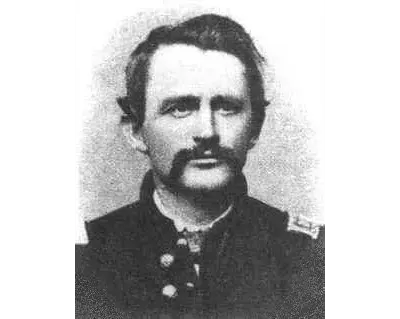
Elon John Farnsworth was a Union Army captain in the American Civil War. He commanded Brigade 1, Division 3 of the Cavalry Corps (Union Army) from June 28, 1863 to July 3, 1863, when he was mortally wounded and died at the Battle of Gettysburg. He was nominated by President Abraham Lincoln for appointment to the grade of brigadier general on June 29, 1863 but was not confirmed by the United States Senate before his death at Gettysburg.
