Friedrich Hayek Quotes
The system of private property is the most important guaranty of freedom, not only for those who own property, but scarcely less for those who do not.
Hayek, Friedrich A. The Road to Serfdom. University of Chicago Press, 1944, p. 104.


Most conservatives of today would be surprised that this fundamental notion evolved from the liberals when conservatives were advocating imperial monarchies and powerful states in control of all their resources.


At the time, land was much more of a necessity for the average person than today in America. But in early America and much of the rest of the world today, without land one had little or no opportunity to do almost anything. So equality of land distribution was necessary for equality of opportunity. America never solved the problem of equality of land distribution; we just developed an economy where land was not longer so critical to opportunity.


While generally true, Mises here again exaggerates his “proof” by selectively ignoring or being ignorant of counter-examples. The Roman Catholic Church is a classic counter-example where priests, monks, and others owned nothing as individuals, but produced some great science (eg Gregor Mendel), art (the illuminated texts of the middle ages), literature (St Thomas Aquinas, etc). The best counter example that was just evident in the last decade of Misis’ life is Communist Russia. Russian science was better than Fance and Germany and second only to the United States. The Russian ballet and orchestras were second to none. Great literature came out of the Soviet Union and the best of it complained about and attacked the Soviet system of the times. In general, Mises principle tended to be correct throughout history but not always as he dogmatically stated.

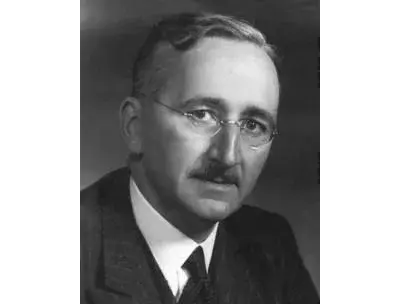
Friedrich August von Hayek CH FBA, often referred to by his initials F. A. Hayek, was an Austrian-British economist and philosopher who is best known for his defence of classical liberalism. Hayek shared the 1974 Nobel Memorial Prize in Economic Sciences with Gunnar Myrdal for his "pioneering work in the theory of money and economic fluctuations and [...] penetrating analysis of the interdependence of economic, social and institutional phenomena". His account of how changing prices communicate information that helps individuals co-ordinate their plans is widely regarded as an important achievement in economics, leading to his Nobel Prize.
