Walter Lippmann Quotes
Private property was the original source of freedom. It still is its main bulwark.
Walter Lippmann, 1889-1974, Political Columnist, The Good Society
Sourced by: Eigen's Political and Historical Quotations


At the time, land was much more of a necessity for the average person than today in America. But in early America and much of the rest of the world today, without land one had little or no opportunity to do almost anything. So equality of land distribution was necessary for equality of opportunity. America never solved the problem of equality of land distribution; we just developed an economy where land was not longer so critical to opportunity.


Most conservatives of today would be surprised that this fundamental notion evolved from the liberals when conservatives were advocating imperial monarchies and powerful states in control of all their resources.


While generally true, Mises here again exaggerates his “proof” by selectively ignoring or being ignorant of counter-examples. The Roman Catholic Church is a classic counter-example where priests, monks, and others owned nothing as individuals, but produced some great science (eg Gregor Mendel), art (the illuminated texts of the middle ages), literature (St Thomas Aquinas, etc). The best counter example that was just evident in the last decade of Misis’ life is Communist Russia. Russian science was better than Fance and Germany and second only to the United States. The Russian ballet and orchestras were second to none. Great literature came out of the Soviet Union and the best of it complained about and attacked the Soviet system of the times. In general, Mises principle tended to be correct throughout history but not always as he dogmatically stated.
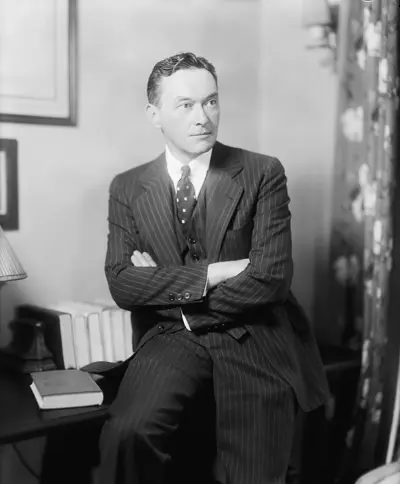
Walter Lippmann was an American writer, reporter and political commentator. With a career spanning 60 years he is famous for being among the first to introduce the concept of Cold War, coining the term "stereotype" in the modern psychological meaning, as well as critiquing media and democracy in his newspaper column and several books, most notably his 1922 book Public Opinion.
