Felix Frankfurter Quotes
The [constitutional] safeguards of "due process of law" and "the equal protection of the laws" summarize the history of freedom of English-speaking peoples running back to Magna Carta and reflected in the constitutional development of our people.
Felix Frankfurter, 1882-1965, U. S. Supreme Court Justice, Malinski v. New York, 1944
Sourced by: Eigen's Political and Historical Quotations


Hamilton acknowledged that the major public objection to the new U. S. Constitution was its lack of a Bill of Rights, which Hamilton argued was unnecessary.

This is probably the first known use of the Bill of Rights phrase in the English language. For the earliest American use, see Edward Rutledge.

Note the use of the phrase “against the government.” One of the unique aspects of the American Constitution and The Bill of Rights is that the government is considered a potential and even probable infringer on the liberties of the people. It is almost as though the government was the potential enemy. Modern libertarians state this very explicitly and it is ever present in the views of both the right and left wings of American politics. Most centrists recoil at the thought that some citizens see the government as the enemy, but even in America there have been times where the government has infringed on the rights of citizens only to have the courts or future administrations and Congresses correct the error.


In a 1949 dissenting opinion in Terminiello v. Chicago Jackson claimed the majority view would “convert the Bill of Rights into a suicide pact.”


Hayward claimed that Wilson was the first American President who ever criticized the American Constitution. Many do not agree as Madison and Jefferson in part, along with most other Americans, found the Constitution so wanting that it was ratified only on condition of the passage of the Bill of Rights. Jackson, was distressed by the limitations on the President and many others had their objections, but Wilson, before he became a politician was a prominent academic political scientist and wrote voluminously and had an intellectual following so his criticism was not considered so “political” as others.


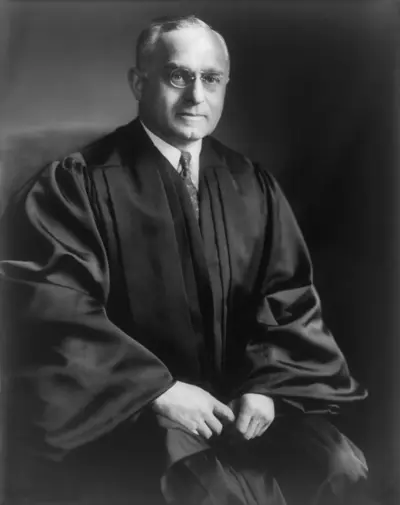
Felix Frankfurter was an American lawyer, professor, and jurist who served as an Associate Justice of the Supreme Court of the United States. Frankfurter served on the Supreme Court from 1939 to 1962 and was a noted advocate of judicial restraint in the judgments of the Court.
