Potter Stewart Quotes
The Constitution nowhere mentions a specific right of personal choice in matters of marriage and family life, but the ‘liberty’ protected by the Due Process Clause of the Fourteenth Amendment covers more than those freedoms explicitly named in the Bill of Rights
Potter Stewart, 1915-1985, U. S. Supreme Court Justice (Republican), Concurring Opinion, Roe v. Wade, January 22, 1973
Sourced by: Eigen's Political and Historical Quotations


For the classic formulation, see Brandeis, Olmstead v. U.S., 1927

Hamilton acknowledged that the major public objection to the new U. S. Constitution was its lack of a Bill of Rights, which Hamilton argued was unnecessary.


This is probably the first known use of the Bill of Rights phrase in the English language. For the earliest American use, see Edward Rutledge.


Note the use of the phrase “against the government.” One of the unique aspects of the American Constitution and The Bill of Rights is that the government is considered a potential and even probable infringer on the liberties of the people. It is almost as though the government was the potential enemy. Modern libertarians state this very explicitly and it is ever present in the views of both the right and left wings of American politics. Most centrists recoil at the thought that some citizens see the government as the enemy, but even in America there have been times where the government has infringed on the rights of citizens only to have the courts or future administrations and Congresses correct the error.


Striking down a law making cross burning a crime:


Hayward claimed that Wilson was the first American President who ever criticized the American Constitution. Many do not agree as Madison and Jefferson in part, along with most other Americans, found the Constitution so wanting that it was ratified only on condition of the passage of the Bill of Rights. Jackson, was distressed by the limitations on the President and many others had their objections, but Wilson, before he became a politician was a prominent academic political scientist and wrote voluminously and had an intellectual following so his criticism was not considered so “political” as others.
The call for individual liberty and the right of personal property by clergy is surprising to many. This Cahier was the consensus of the Clergy of Blois in 1789. There were cahiers of several provinces of France—some by the clergy, some by the nobles. What is fascinating is the emergence of many of the pre-Revolutionary French concepts. The example of the American revolution and its principles was known throughout the educated classes of France.

In a 1949 dissenting opinion in Terminiello v. Chicago Jackson claimed the majority view would “convert the Bill of Rights into a suicide pact.”


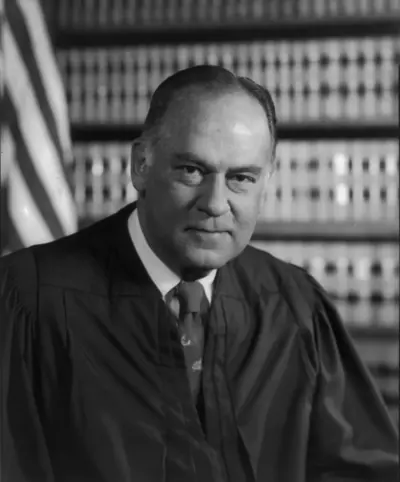
Potter Stewart was an American lawyer and judge who served as an Associate Justice of the United States Supreme Court from 1958 to 1981. During his tenure, he made, among other areas, major contributions to criminal justice reform, civil rights, access to the courts, and Fourth Amendment jurisprudence.
