Patrick Leahy Quotes
Does the Constitution permit the execution of an innocent person?
Patrick Leahy, U.S. Senator (Democrat, VT), Senate Conformation Hearings for Chief Justice John Glover Roberts, Jr., September 2005
Sourced by: Eigen's Political and Historical Quotations

Responding to suggestions that drug traffickers be summarily executed:

On the Fugitive Slave Act: As one of the leading American Catholic intellectuals during the 19th Century, Brownson’s opinions went far in keeping Catholics from joining the side of the abolitionists. However, just a few years later his tone would change and he would become one of the few Catholic writers to refuse to defend slavery, see {610710}. While the majority of Catholics refused to join the abolition movement, they often did so because abolitionism was closely tied to anti-Catholicism, see Gordon {611392} or Shaftesbury {611106}. Other reasons included Irish immigrants fearful of competition from Black labor and the fear of liberal individualism and social disorder, which was prevalent in 19th century Catholic thought. For a further explanation on the relationship between American Catholics and slavery, see McGreevy {612036}.


When asked for his position on abortion, candidate Bush answered:. Nine years later, President Bush proposed a constitutional amendment to overturn the Supreme Court's ruling on flag desecration.


Federal officials and commissioners issued laws, directives and orders that were very unpopular with the Mormons who were in the overwhelming majority of the Utah territory. The Mormon “government” was a type of theocracy but a very popular one. The Mormons tried to test the constitutionality and legality of the Federal laws and orders before they would obey. The government position was that they should obey and then could test the laws in the courts. The Mormons eventually lost in the courts anyway, but the principle of obedience to law until it can be tested and reversed has generally been the rule of U. S. Law. However, civil disobedience in which many religions have engaged in our history argues the obverse. Eventually Taylor had to go “underground” and rule the church from exile in which state he died.

Powell was the Secretary of State and Addington kept advising the administration that as long as the President was acting in defense of the country in his capacity as Commander in Chief, he did not have to obey any existing laws that had been Constitutionally passed which in the opinion of the President restricted or limited the President or the executive branch. Addington was an attorney and Assistant to the Vice President, but he was given much responsibility for administration policy. Powell the Secretary of State of the Administration could not have disagreed more and although most politicians including Republicans disagreed with the Addington thesis, Powell was one of the few Republicans to criticize the Addington position.

Hamilton acknowledged that the major public objection to the new U. S. Constitution was its lack of a Bill of Rights, which Hamilton argued was unnecessary.


She was referring to the slander that was commonly used by her fellow Republican, Senator Joseph P. McCarthy in his demagoguery. She was the first member of the Senate to Condemn McCarthy for his abuse and lies. Led by her example, the other senators got over their fear of McCarthy attacking them and the Senate Censured the Demagogue.

This ruling upheld a military draft for males only. The logic was that men and women were dissimilar persons.

The president was asked if he supported the Supreme court's school desegregation decision:


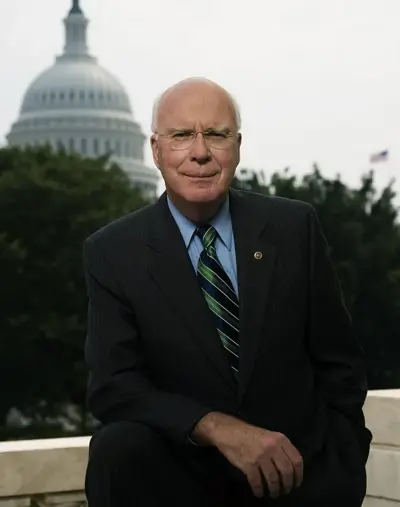
Patrick Joseph Leahy is an American politician and attorney serving as the president pro tempore of the United States Senate, and as the senior United States senator from Vermont. Leahy was first elected to the Senate in 1974, and previously served as president pro tempore from 2012 to 2015. He is the chair of the Senate Appropriations Committee.
