Orestes Augustus Brownson Quotes
I am under a cloud now because I refuse to defend slavery as a natural right, and have received also my ‘warning’ from a portion of the Catholic public.
Orestes Augustus Brownson, 1803-1876, Clergyman & Writer, Founder, Workingmen's Party, Letter to Charles de Montalembert, May 24, 1857
Sourced by: Eigen's Political and Historical Quotations

On the Fugitive Slave Act: As one of the leading American Catholic intellectuals during the 19th Century, Brownson’s opinions went far in keeping Catholics from joining the side of the abolitionists. However, just a few years later his tone would change and he would become one of the few Catholic writers to refuse to defend slavery, see {610710}. While the majority of Catholics refused to join the abolition movement, they often did so because abolitionism was closely tied to anti-Catholicism, see Gordon {611392} or Shaftesbury {611106}. Other reasons included Irish immigrants fearful of competition from Black labor and the fear of liberal individualism and social disorder, which was prevalent in 19th century Catholic thought. For a further explanation on the relationship between American Catholics and slavery, see McGreevy {612036}.


Many of the Americans captured by the Islamic Barbary pirates in the years leading up to the Barbary War were sold into slavery. Eaton, who was the American consul at Tunis, couldn’t help but notice the tragic parallel between the suffering of those captured by the pirates and slaves in the American South.

The highest court in New York.

Though Leo XIII was very much opposed to slavery, his claim that the Catholic Church “from the beginning” sought to end slavery overlooks the inconsistent reality of several of his predecessors’ teachings. For an example of this inconsistency one may find a relevant example as late as the 19th century, see the teachings of Gregory XVI {611428}, Pius IX {612304}, and Leo XIII {611844}


Spinoza was one of the most feared intellectuals in human history—feared, that is, by the established power structures. Spinoza’s ideas were considered so radical and dangerous that he was the only man in history who was excommunicated by the Catholics, the Jews and the Muslims.


Buchanan us considered by most historians to have been the worst or one of the worst Presidents of the United States. At this point, he was a lame duck president with Abraham Lincoln, the President Elect soon to take office. This speech, just encouraged the South more than ever and helped to bring about the Civil War. His vacillation and lack of any leadership on the slavery question exacerbated the polarization that was tearing the nation apart.


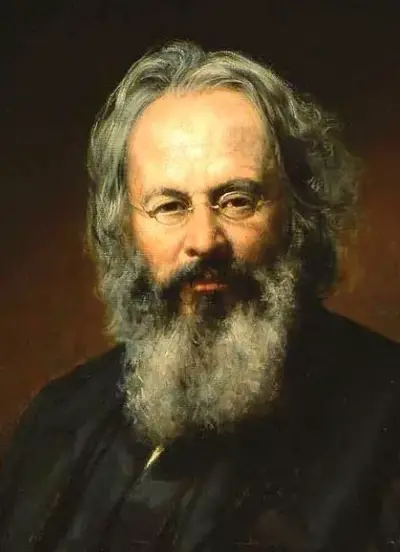
- Born: September 16, 1803
- Died: April 17, 1876
- Nationality: American
- Profession:
Orestes Augustus Brownson was a New England intellectual and activist, preacher, labor organizer, and noted Catholic convert and writer. Brownson was a publicist, a career which spanned his affiliation with the New England Transcendentalists through his subsequent conversion to Roman Catholicism.
