William Lloyd Garrison Quotes
Our natural, God-given right of free-speech, though constitutionally recognized as sacred in every part of the country, can be exercised in the slaveholding States only at the peril of our lives. Slavery cannot bear one ray of light, or the slightest criticism.
William Lloyd Garrison, 1805-1879, Editor & Abolitionist, Address delivered in the Broadway Tabernacle, New York, February 14, 1854
Sourced by: Eigen's Political and Historical Quotations

This is an example of the claim that slavery can not stand criticism. See William Lloyd Garrison: {613489}.


Striking down a law making cross burning a crime:


Even before we had a Constitution there was major opposition to slavery. The “price” of the American Union was the acceptance of the slavery of the South. But the hypocrisy of a country based on liberty to allow and enforce slavery was not lost on the founding fathers. Ironically the abolitionists among the founding fathers were certain that they could persuade the Southern slaveholders of the error of slavery in a few years and things would be set right in the land. Even George Washington {630626}, and Thomas Jefferson and some other slaveowners at the time wished to see its abolition. Slaveholding Southern Founding Fathers in general were so wary of the abolitionists that they achieved structural, disproportionate, power in the new Constitution to ward off the abolitionists attempts to reform slavery.


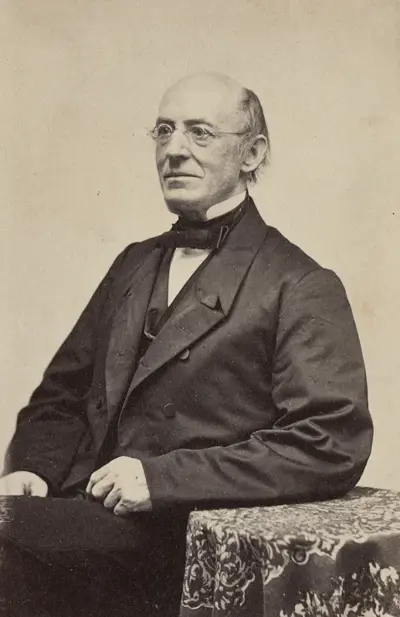
- Born: December 10, 1805
- Died: May 24, 1879
- Nationality: American
- Profession: Abolitionist, Journalist
William Lloyd Garrison, who signed and printed his name Wm. Lloyd Garrison, was a prominent American abolitionist, journalist, suffragist, and social reformer. He is best known for his widely-read anti-slavery newspaper The Liberator, which he founded in 1831 and published in Boston until slavery in the United States was abolished by Constitutional amendment in 1865. He was one of the founders of the American Anti-Slavery Society, and promoted immediate and uncompensated, as opposed to gradual and compensated, emancipation of slaves in the United States.
