Frederick Douglass Quotes
To suppress free speech is a double wrong. It violates the rights of the hearer as well as those of the speaker
Frederick Douglasss, ~1817-1895, Abolitionist & Editor, Recorder of Deeds, District of Columbia, U. S. Minister to Haiti, The Essential Frederick Douglasss (2008 Edition)
Sourced by: Eigen's Political and Historical Quotations


This became a critically important quotation a half century after it was made. Judge Hand articulated the majority Western and Judeo-Christian value proposition between dissent and heresy. However, for the majority of the Islamic world, the reverse represents the majority value that is held. There is a minority in the West that agrees that avoidance of heresy is paramount and a minority of the Muslim world that agrees that the protection of dissent is the more important value, but the two civilizations were at odds in the 20th and 21st centuries. However, Islam is about 600 years younger than Christianity. 600 years ago, the Christian world agreed with the Muslim society and prevention of heresy was the more important value. The Reformation and the enlightenment followed by the world example of America produced a transformation and this may occur in the majority of the Islamic world in time.


Danish fundamentalist Muslim Groups were demonstrating, protesting, and threatening Danes who wrote or published cartoons depicting the Prophet Mohammed. Other Europeans who had committed what Muslims thought to be blasphemy had been attacked and even murdered by Muslim fundamentalists. Led by Nasim Rahnama, some Danish Muslims, braved attack and possible death, and produced a petition of Muslims defending the right of freedom of publication. See {59932} & {59919}.

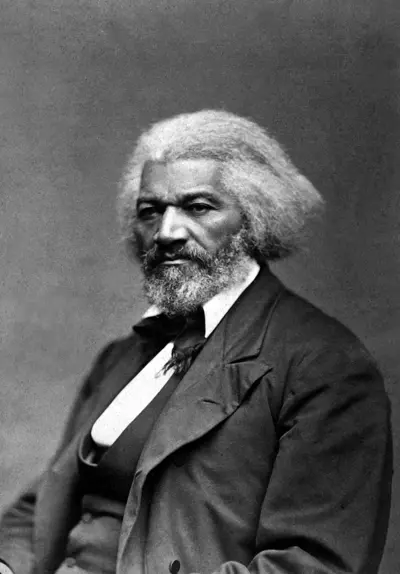
Frederick Douglass was an American social reformer, abolitionist, orator, writer, and statesman. After escaping from slavery in Maryland, he became a national leader of the abolitionist movement in Massachusetts and New York, becoming famous for his oratory and incisive antislavery writings. Accordingly, he was described by abolitionists in his time as a living counterexample to slaveholders' arguments that slaves lacked the intellectual capacity to function as independent American citizens. Likewise, Northerners at the time found it hard to believe that such a great orator had once been a slave.
