Archibald MacLeish Quotes
Once you permit those who are convinced of their own superior rightness to censor and silence and suppress those who hold contrary opinions, just at that moment the citadel has been surrendered.
MacLeish, Archibald. A Time to Speak: The Selected Prose of Archibald MacLeish. Houghton Mifflin, 1941, p. 120.


This became a critically important quotation a half century after it was made. Judge Hand articulated the majority Western and Judeo-Christian value proposition between dissent and heresy. However, for the majority of the Islamic world, the reverse represents the majority value that is held. There is a minority in the West that agrees that avoidance of heresy is paramount and a minority of the Muslim world that agrees that the protection of dissent is the more important value, but the two civilizations were at odds in the 20th and 21st centuries. However, Islam is about 600 years younger than Christianity. 600 years ago, the Christian world agreed with the Muslim society and prevention of heresy was the more important value. The Reformation and the enlightenment followed by the world example of America produced a transformation and this may occur in the majority of the Islamic world in time.


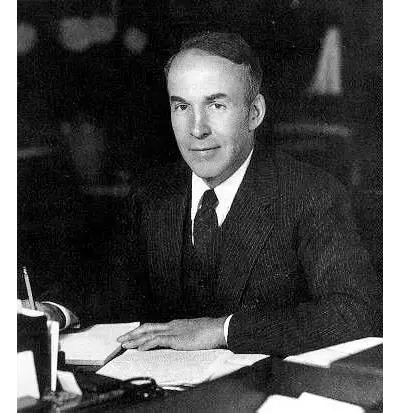
Archibald MacLeish was an American poet and writer, who was associated with the modernist school of poetry. MacLeish studied English at Yale University and law at Harvard University. He enlisted in and saw action during the First World War and lived in Paris in the 1920s. On returning to the United States, he contributed to Henry Luce's magazine Fortune from 1929 to 1938. For five years, MacLeish was the ninth Librarian of Congress, a post he accepted at the urging of President Franklin D. Roosevelt. From 1949 to 1962, he was Boylston Professor of Rhetoric and Oratory at Harvard. He was awarded three Pulitzer Prizes for his work.
