E. J. Dionne Jr. Quotes
Those who favor capital punishment do so in the name of justice. Can there be any argument against insisting that it be imposed justly—and not on the wrong people.
E. J. Dionne Jr., Columnist, Quoted in The American Spectator, April 2000
Sourced by: Eigen's Political and Historical Quotations


Elliott had electrocuted over 400 condemned criminals including Sacco and Vanzetti and the first woman who was electrocuted.

Louis Eugene Walcott. Malcolm X had criticized Elijah Mohammed for sexual behavior with staff.


Marie Joseph Paul Yves Roch Gilbert du Motier


Einstein had changed his mind. He like almost everyone else at the time favored the death penalty, but in 1927 came to the new conclusion for the same reasons that many American politicians stated 70 years later. He had no compunctions against capital punishment for murderers who were dangers to society, but the potential error of the justice system led him to oppose state sanctioned execution. At the time the number of errors in capital cases that had been demonstrated were few. But as a scientist, Einstein knew that all human endeavors were prone to error. He was a strong law and order supporter however—see {588606}.


Her view was only held by a few British citizens. Capital Punishment was ended in Britain.


This is the first appearance of the principle which guides law enforcement in most of America and the other industrialized democracies around the world. Texas and some other localities have rejected this notion and see the occasional execution of an innocent person the cost we must pay in order to preserve law and order.

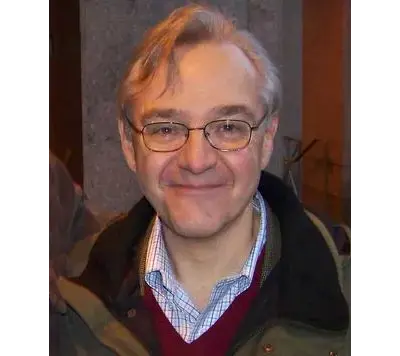
Eugene Joseph Dionne Jr. is an American journalist, political commentator, and long-time op-ed columnist for The Washington Post. He is also a senior fellow in governance studies at the Brookings Institution, a professor in the Foundations of Democracy and Culture at the McCourt School of Public Policy of Georgetown University, and an NPR, MSNBC, and PBS commentator.
