Scott Turow Quotes
The issue is not whether there are horrible cases where the penalty seems "right". The real question is whether we will ever design a capital system that reaches only the "right" cases, without dragging in the wrong cases, cases of innocence or cases where death is not proportionate punishment. Slowly, even reluctantly, I have realized the answer to that question is no- we will never get it right.
Turow, Scott. Ultimate Punishment: A Lawyer's Reflections on Dealing with the Death Penalty. Farrar, Straus and Giroux, 2003, p. 114.


Einstein had changed his mind. He like almost everyone else at the time favored the death penalty, but in 1927 came to the new conclusion for the same reasons that many American politicians stated 70 years later. He had no compunctions against capital punishment for murderers who were dangers to society, but the potential error of the justice system led him to oppose state sanctioned execution. At the time the number of errors in capital cases that had been demonstrated were few. But as a scientist, Einstein knew that all human endeavors were prone to error. He was a strong law and order supporter however—see {588606}.


Elliott had electrocuted over 400 condemned criminals including Sacco and Vanzetti and the first woman who was electrocuted.


This is the first appearance of the principle which guides law enforcement in most of America and the other industrialized democracies around the world. Texas and some other localities have rejected this notion and see the occasional execution of an innocent person the cost we must pay in order to preserve law and order.
This interesting historical quotation illustrates the fact that in almost every American generation there are those who believe that society has gone too far in protecting the rights of criminal suspects at the expense of law and order in the general society. This is nothing new. This is a classic argument given by those who would deny a defendant the Constitutional protection against self-incrimination. The belief that an innocent man has nothing to fear from the police is refuted by the many cases of innocent men being convicted by evidence they have given in the belief that they were innocent, and served long jail sentences only to later be proved by DNA evidence that they could not possibly have been guilty. Since Nott’s day, society has not only found many cases where honest error was made by the police or prosecutors, but many where there was venal prosecutorial misconduct and defendants were jailed even though the authorities were aware of evidence of innocence and kept it secret. There have been a number of these cases where a defendant was on death row and about to be executed when it was found he was innocent. Probably there have been men wrongly executed. See {629444} for a probable example.

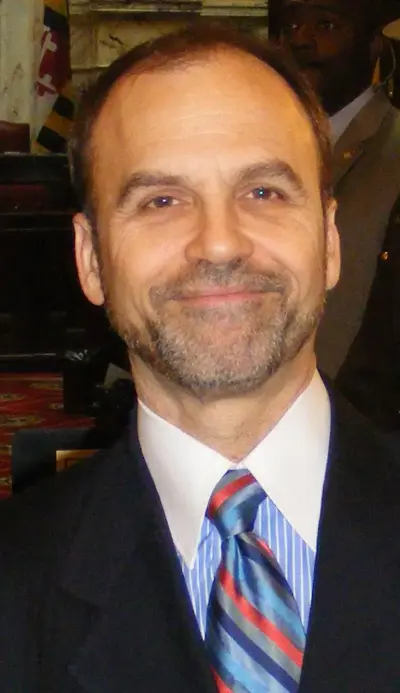
Scott Frederick Turow is an American author and lawyer. Turow has written 11 fiction and three nonfiction books, which have been translated into more than 40 languages and sold more than 30 million copies. Films have been based on several of his books.
