Leo Tolstoy Quotes
Every punishment is based, not on logic or the feeling of justice, but on the desire to wish evil on those who have done evil to you or to another person…. Everything about our present system of punishments and about all criminal law will be thought of by future generations in the same way that we think of cannibalism or human sacrifice to the pagan gods. “How did they not see the uselessness and cruelty of those things which they did?” our descendants will say about us.
Leo Tolstoy, 1828-1910, Russian Writer & Philosopher, A Calendar of Wisdom 1908--July 4
Sourced by: Eigen's Political and Historical Quotations


Elliott had electrocuted over 400 condemned criminals including Sacco and Vanzetti and the first woman who was electrocuted.


Most people reading this think at first that if comes out of the Middle Ages, but it is quite contemporary expressing a point of view that holds that the state is but the instrument of and subservient to God as defined by Protestant Fundamentalism.


Falwell supported capital punishment. In this statement he was describing it, not opposing it.

Einstein had changed his mind. He like almost everyone else at the time favored the death penalty, but in 1927 came to the new conclusion for the same reasons that many American politicians stated 70 years later. He had no compunctions against capital punishment for murderers who were dangers to society, but the potential error of the justice system led him to oppose state sanctioned execution. At the time the number of errors in capital cases that had been demonstrated were few. But as a scientist, Einstein knew that all human endeavors were prone to error. He was a strong law and order supporter however—see {588606}.


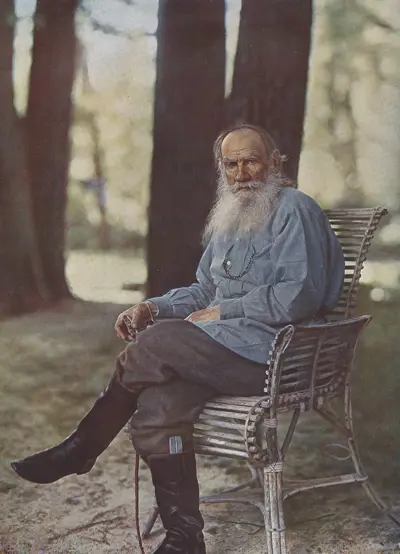
Count Lev Nikolayevich Tolstoy, 9 September, 1828 – 20 November, 1910), usually referred to in English as Leo Tolstoy, was a Russian writer who is regarded as one of the greatest authors of all time. He received nominations for the Nobel Prize in Literature every year from 1902 to 1906 and for the Nobel Peace Prize in 1901, 1902, and 1909. That he never won is a major controversy.
