Benjamin N. Cardozo Quotes
The death penalty will seem to the next generation, as it seems to many even now, an anachronism too discordant to be suffered, mocking with grim reproach all our clamorous professions of the sanctity of life.
Benjamin N. Cardozo, 1870-1938, U.S. Federal Appellate Justice, Law and Literature, 1931
Sourced by: Eigen's Political and Historical Quotations


Elliott had electrocuted over 400 condemned criminals including Sacco and Vanzetti and the first woman who was electrocuted.


Einstein had changed his mind. He like almost everyone else at the time favored the death penalty, but in 1927 came to the new conclusion for the same reasons that many American politicians stated 70 years later. He had no compunctions against capital punishment for murderers who were dangers to society, but the potential error of the justice system led him to oppose state sanctioned execution. At the time the number of errors in capital cases that had been demonstrated were few. But as a scientist, Einstein knew that all human endeavors were prone to error. He was a strong law and order supporter however—see {588606}.


Louis Eugene Walcott. Malcolm X had criticized Elijah Mohammed for sexual behavior with staff.


Rosemary Barkett, Chief Justice of the Florida Supreme Court, was nominated to the U. S. Court of Appeals. In her previous role she had upheld over 200 death sentences. Nonetheless, Senator Hatch, an advocate of capital punishment, held up her swift confirmation.


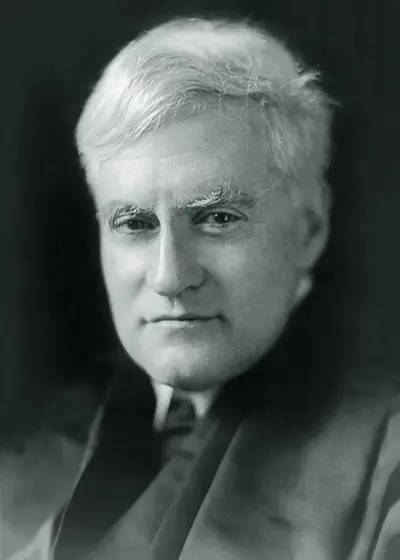
Benjamin Nathan Cardozo was an American jurist who served on the New York Court of Appeals and later as an Associate Justice of the Supreme Court. Cardozo is remembered for his significant influence on the development of American common law in the 20th century, in addition to his philosophy and vivid prose style. Cardozo served on the Supreme Court six years, from 1932 until his death in 1938. Many of his landmark decisions were delivered during his eighteen-year tenure on the New York Court of Appeals, the highest court of that state.
