John Paul Stevens Quotes
The practice of executing such offenders is a relic of the past and is inconsistent with evolving standards of decency in a civilized society.
Stevens, John Paul. Atkins v. Virginia, 536 U.S. 304, Supreme Court of the United States, 20 June 2002, p. 321.

Einstein had changed his mind. He like almost everyone else at the time favored the death penalty, but in 1927 came to the new conclusion for the same reasons that many American politicians stated 70 years later. He had no compunctions against capital punishment for murderers who were dangers to society, but the potential error of the justice system led him to oppose state sanctioned execution. At the time the number of errors in capital cases that had been demonstrated were few. But as a scientist, Einstein knew that all human endeavors were prone to error. He was a strong law and order supporter however—see {588606}.


Elliott had electrocuted over 400 condemned criminals including Sacco and Vanzetti and the first woman who was electrocuted.


The capital punishment debate was raging in Europe. Belgium and parts of Switzerland had just abolished the death penalty.


In his early career, her supported capital punishment, but changed his mind as can be seen in this quotation.


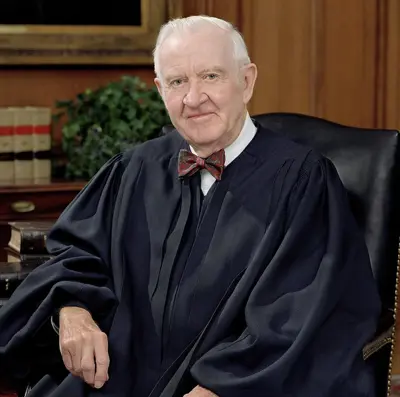
John Paul Stevens was an American lawyer and jurist who served as an associate justice of the United States Supreme Court from 1975 until his voluntary retirement in 2010. At the time of his retirement, he was the second-oldest-serving justice in the history of the court and the third-longest-serving justice. At the time of his death, he was the longest lived Supreme Court justice ever. His long tenure saw him write for the court on most issues of American law, including civil liberties, death penalty, government action and intellectual property. In cases involving presidents of the United States, he wrote for the court that they were to be held accountable under American law. A registered Republican when appointed who throughout his life identified as a conservative, Stevens was considered to have been on the liberal side of the court at the time of his retirement.
