Bianca Jagger Quotes
The death penalty has always been fraught with racial bias…. I cannot understand how people can find pleasure in, or believe that civilized values are served by, the killing of another human being.
Bianca Jagger, Blanca Moreno de Macias, Human Rights Activist, Leadership Council Member, Amnesty International, The Markkula Center for Applied Ethics, Reflections on Working Toward Peace
Sourced by: Eigen's Political and Historical Quotations


At the time none of the comic book superhero plots, like most popular entertainment and culture, ignored the existence of African Americans.


Johnson was then Vice President.

The issue of slavery which had been suppressed in Congress for the first decades of the nation broke out when Missouri statehood was considered. By previous agreement, slavery was not even discussed in Congress but the time period elapsed. Tallmadge not only proposed that no more slaves could come into Missouri {613176} but most shocking to the Southerners was that every person born in the new state would be free at the age of 25. In a generation, there would be no more slavery in Missouri and there would be no economic compensation for slave owners at all. The House of Representatives accepted the amendment, but it failed in the Senate. At that time, Senators were not elected by voters but were appointed by the state legislators and the Southern slave states had a disproportionate share of the senate from a population point of view. But what this quotation shows clearly that a majority of the country in 1819 were opposed to slavery and were willing to end it without compensation.


At the time, American racism was rampant, and about 150 Blacks were lynched each year with no punishment for the murderers. The heavyweight boxing champion of the world was a major hero, and the thought of a Black possibly winning the title was unthinkable.

Brigham Young, the Mormon Leader and Territorial Governor, was strongly opposed to Interracial sex. See {629150}. An earlier clause provided for loss of the rights to a slave if the master had sexual relations with the slave, something that no Southern State had ever done.


In the 1930s African Americans who traveled were subject to countless humiliations whenever the sought hotels, rooming houses, restaurants and other accommodations. Gas stations would not allow them to use bathrooms and they were reduced to using open fields. Traveling and vacationing was, for Blacks, humiliating. Wikipedia: “Green reviewed hotels and restaurants that did business with African Americans during the time of Jim Crow laws and racial segregation in the United States. He printed 15,000 copies each year. In the 1930s, Green began his work by compiling data on stores in the New York area that accepted black travelers, and published his first guide in 1936. Similar guides had been published for Jewish travelers, who sometimes faced discrimination. Green's guide was so popular that he immediately began to expand its coverage the next year to other US destinations, adding hotel and restaurants as well.”


Jury nullification is when the jury believes that the defendant has committed the crime alleged, but acquits anyway because it believes the law is wrong or the defendant acted properly or justly. Most trial judges detest the concept and often tell the jury that they may not engage in the practice. However, there is a long American tradition of jury nullification dating back to colonial America. This quotation shows one of the negative aspects of nullification. See {640833}.


When the Confederate Government realized that the Union was planning to arm escaped slaves and induct them into the Union Army, they quickly passed a law that declared any escaped slave who joined the Union Army or wore its uniform was guilty of Treason and would be executed. Most Union Generals one way or another got word to the Confederate Officers that they had better treat all Negro Union Soldiers as prisoners of war. Even President Lincoln warned the South. Butler, however, had a large number of Negro troops in his area and had heard threats of some of the Southerners to execute Black prisoners of war. He had a way of making things very clear, and he was able to prevent murder of any of his Negro troops despite the Treason law.


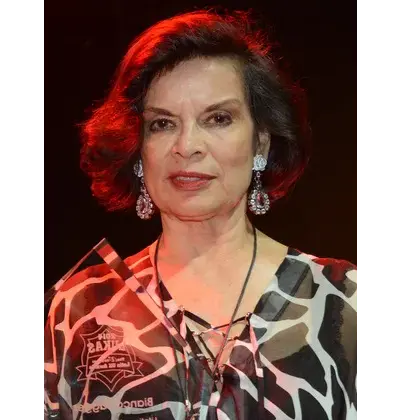
Bianca Jagger is a Nicaraguan social and human rights advocate and a former actress. Jagger currently serves as a Council of Europe goodwill ambassador, founder and chair of the Bianca Jagger Human Rights Foundation, member of the Executive Director's Leadership Council of Amnesty International USA, and a trustee of the Amazon Charitable Trust.
