Sterling A. Brown Quotes
They got the judges / They got the lawyers / They got the jury rolls / They got the law / They don’t come by ones. / They got the sheriffs / They got the deputies / They don’t come by twos. / They got the shotguns / They got the rope / We git the justice / In the end / And they come by tens.
Sterling A. Brown, 1901-1989, Poet, Protest Poem Against Lynching of Blacks, 1937
Sourced by: Eigen's Political and Historical Quotations


Moss and two other blacks had had the temerity to open a grocery store. White competitors attempted to have the city authorities close the store. When that failed, a mob took the three Black owners to the city limits and shot them all to death. Moss was a close friend of Ida B. Wells, and his lynching started her on her no famous anti-lynching expose and campaign. See {44393} for her initial response.


For years through the Jim Crow years, Whites murdered many Blacks with impunity if they were perceived to be uppity or to try and obtain their Constitutionally Protected rights. Most took place in the South. The Negroes were typically tortured, mutilated, burned and hung from trees where they would be left for days as the major purpose was to strike terror in the Southern Black population. The Southern State and local governments never opposed the policy via oratory, legislation of law enforcement. The Federal Government did not interfere either. And much of the FBI under J. Edgar Hoover actually enabled the White Citizen’s Councils and the Klu Klux Klan. The NAACP began an anti-lynching campaign and Ms. Holiday was a one-woman public exposure campaign centered around this song. The anthem itself was written by a New York City schoolteacher named Abel Meeropol, using the pen name, Lewis Allan. It reached millions of Americans and Holiday fans the world over. To view some of the historical scenes described in the song, see http://withoutsanctuary.org/main.html


He was not only an atheist himself, but he was a major opponent of organized religion which he regarded as one or the major initiators and drivers of slavery, segregation and discrimination. For this reason he was critical of Martin Luther King—{583307}. His irreligiosity had always prevented his gaining much support from his fellow African Americans even though a great writer like H. L. Menken considered Schuyler, "the best writer in America".


The Senator was arguing against a bill to correct an aspect of the immigration law where infants and very young clildren are broght to the United States by parents who entered illegally. The children grow up in the United States—the only country and home that they have ever known. American law required that they be deported to “their countries” which they have no memory of and many do not even speak the language or know the culture. Sessions, is an example of the view that law defines justice. Therefore laws cannot be unjust nor can enforcing the law. Opponents point out that even in the United States we have, in earlier times, “enforced the law” which we came to regret and see as an injustice. The Fugitive slave laws, the Southern racial discrimination laws, and the law allowing Japanese American Citizens to be interned and lose their land during WWII are a few examples of laws, the enforcement of which is seen by most Americans as having been unjust. The execution of “witches” in early America was in conformity with the law.


Parker and other escaped slaves in Christiana fought off slave catchers and killed the slave owner leading them. Charged with treason, he escaped to Canada with his family and lived there the rest of his life. While not a polished writer, after he himself had escaped and went to Christiana and leaned to read and write. He wrote this narrative of his life as a slave—one of the few written works we have from slaves.


This quotation illustrates how the racist South defeated the objectives of the Civil War and Reconstruction by the institution of Jim Crowe laws and so called “states’ rights”. It would take more than another half century for the Yankees and the vast majority of the non-Southern Americans decided that the Southerners could no longer “do as they pleased” with fellow human beings. It is hard to believe for us today that an entire section of our country could actually believe in the morality of the South but that is the tragic history of race relations in America.
This statement was published in a major magazine of the time. It referred to a notorious lynching in the South where the victim had been brutally tortured and burned to death. In this case the victim had apparently committed a horrible crime. The Bishop condemned the horrific nature or the lynching but took the view that it was an act of insanity and that the relatives of the child killed by the lynching victim may well have been driven to insanity by the act However, this lynching, like most all in the South was not just an act of vengeance—insane or not—by relatives of a victim, it was participated on by a large mob, many of whom had no relationship to any of the parties. Whites who committed horrible crimes were rarely lynched, but many accused Blacks were lynched even though they turned out to have been innocent.


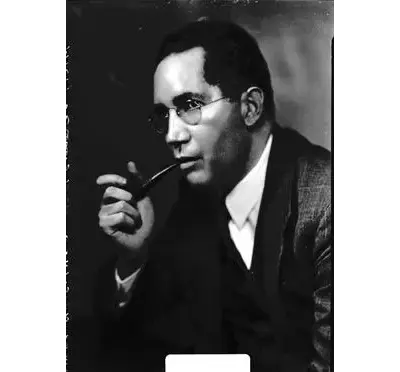
Sterling Allen Brown was a black professor, folklorist, poet, literary critic, and first Poet Laureate of the District of Columbia. He chiefly studied black culture of the Southern United States and was a full professor at Howard University for most of his career. He was a visiting professor at several other notable institutions, including Vassar College, New York University (NYU), Atlanta University, and Yale University.
