Fred Korematsu Quotes
I didn't think that the government would go as far as to include American citizens to be interned without a hearing.
Korematsu, Fred. Interviewed by Peter Irons. The Courage of Their Convictions: Sixteen Americans Who Fought Their Way to the Supreme Court, by Peter Irons, The Free Press, 1988, p. 44.


The Proclamation was a belated admission of the disgraceful internment of loyal Japanese Americans during WWII. See {587961}. “Evacuation” was the euphemism for rounding up Japanese American citizens and putting them in internment camps. Not a single Japanese American was involved in any effort to sabotage or undermine the United States. The same cannot be said about the German Americans where a few did work against U. S. interests and yet the German-Americans were never rounded up. The explanation of the difference has been long debated. Racism was a part of it; California paranoia, another. And unfortunately, Japanese Americans owned very desirable land in California and when they could no longer make their payments some interests gobbled up the land and that was a motivation for some. Regardless, it was one of the low points in American history, and warranted this Presidential and national apology.


Note the use of the phrase “against the government.” One of the unique aspects of the American Constitution and The Bill of Rights is that the government is considered a potential and even probable infringer on the liberties of the people. It is almost as though the government was the potential enemy. Modern libertarians state this very explicitly and it is ever present in the views of both the right and left wings of American politics. Most centrists recoil at the thought that some citizens see the government as the enemy, but even in America there have been times where the government has infringed on the rights of citizens only to have the courts or future administrations and Congresses correct the error.


Kahn had been arrested during the War on Terrorism and then released without any charges being filed.

See {42210}, {626788}, {626784}. Palmer had been a potential Presidential candidate until his excesses ended that possibility.

In the aftermath of 9-11, there was a call for giving the law enforcement agencies more authority and the Patriot Act was passed in haste and fear. Some law enforcement personnel then went about picking up Arab Americans and in many cases holding them incommunicado without any charges. No terrorists were discovered by this process and yet good American citizens were abused, traumatized and insulted. In our zeal to protect American freedom, we actually began to resemble some of the capricious and abusive practices of our undemocratic enemies. There were other abuses allowed under the Patriot Act, but at the time of this writing the extent had not yet been revealed, but the refusal of the authorities to make public the national security benefits suggests that there was not much national security benefit and much abuse.

The choice is usually contrasted between guilty persons going free, rather an innocent one be adjudicated guilty. But here the justice tells us that the avoidance of an innocent person being subject to easy arrest is important enough to have a system where guilty people sometimes escape justice.


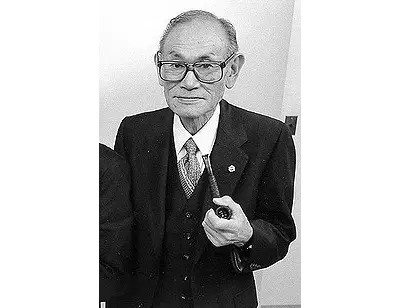
Fred Toyosaburo Korematsu was an American civil rights activist who objected to the internment of Japanese Americans during World War II. Shortly after the Imperial Japanese Navy launched its attack on Pearl Harbor, President Franklin D. Roosevelt issued Executive Order 9066, which authorized the removal of individuals of Japanese ancestry living on the West Coast from their homes and their mandatory imprisonment in internment camps, but Korematsu instead challenged the orders and became a fugitive.
