Winston Churchill Quotes
The national emergency no longer justifies abrogation of individual rights of Habeas Corpus and trial by jury on definite charges.
Mosley had been incarcerated without charges or trial under the “national emergency” of the Second World War. This prevented him from organizing his “Blackshirts.” When it was clear that Germany would lose the war, Oswald was released, but without the prospect of Fascism dominating continental Europe, there was little interest in Fascist movements in England.
Winston Churchill, 1874-1965, British Prime Minister (Conservative), Statement upon releasing British Nazi Fascist Oswald Mosley from indefinite detention
Sourced by: Eigen's Political and Historical Quotations

Rynnymede was the location in England where the Barons of the realm confronted King John and forced him to sign the Magna Carta. This was the first event that limited the powers of the King


Responding to suggestions that drug traffickers be summarily executed:


There are some who believe that in a time of national emergency the government has the right to suspend the bill of rights or any other constitutional provision. This view is typically held by most foreign governments and they do this all the time. However in America, there is a general consensus that emergency does not vitiate the constitution. However even President Abraham Lincoln tried to suspend aspects of the Bill of Rights during a national crisis.


Americans are divided as to whether this should be encouraged and helped or not.


Note the use of the phrase “against the government.” One of the unique aspects of the American Constitution and The Bill of Rights is that the government is considered a potential and even probable infringer on the liberties of the people. It is almost as though the government was the potential enemy. Modern libertarians state this very explicitly and it is ever present in the views of both the right and left wings of American politics. Most centrists recoil at the thought that some citizens see the government as the enemy, but even in America there have been times where the government has infringed on the rights of citizens only to have the courts or future administrations and Congresses correct the error.
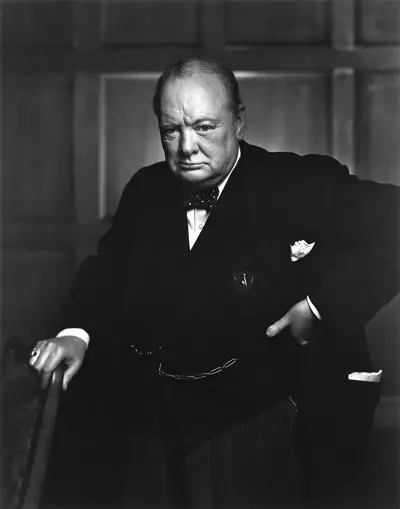
Sir Winston Leonard Spencer Churchill, KG, OM, CH, TD, DL, FRS, RA was the Prime Minister of the United Kingdom from 1940 to 1945, during the Second World War, and again from 1951 to 1955. Apart from two years between 1922 and 1924, Churchill was a Member of Parliament (MP) from 1900 to 1964 and represented a total of five constituencies. Ideologically an economic liberal and imperialist, he was for most of his career a member of the Conservative Party, as leader from 1940 to 1955. He was a member of the Liberal Party from 1904 to 1924. Churchill was also well known for his military career and as a historian, painter and writer, and among his many awards was the Nobel Prize in Literature.
